
Faire les courses à Monoprix

Instructions:
This activity is part of a lesson I am designing for my seventh grade class, which is currently working on a food unit. To add both practical application and an element of culture, students will explore the website for Monoprix (https://www.monoprix.fr/courses-en-ligne), a French grocery store similar to our Fred Meyer. The video above is an explanation of how students will navigate the site and do imaginary shopping for themselves. They will create a shopping list with the names of all of the items they wish to purchase (food, clothing, home goods), as well as the price. After they have completed the activity, students will be able to share their shopping lists with others, discuss new vocabulary, comment on cultural differences and costs, etc. This activity should be done entirely in French (as are the directions).

Goals:
-Students can navigate a [virtual] French grocery store to shop for necessities and desired products.
-Students can use their food vocabulary and context clues to successfully identify foods, clothing, home goods, etc.
-Students can gain experience with shopping in a French-speaking environment, anticipate costs relative to in the US, and understand associated cultural expectations.
Solving Two-step Equations

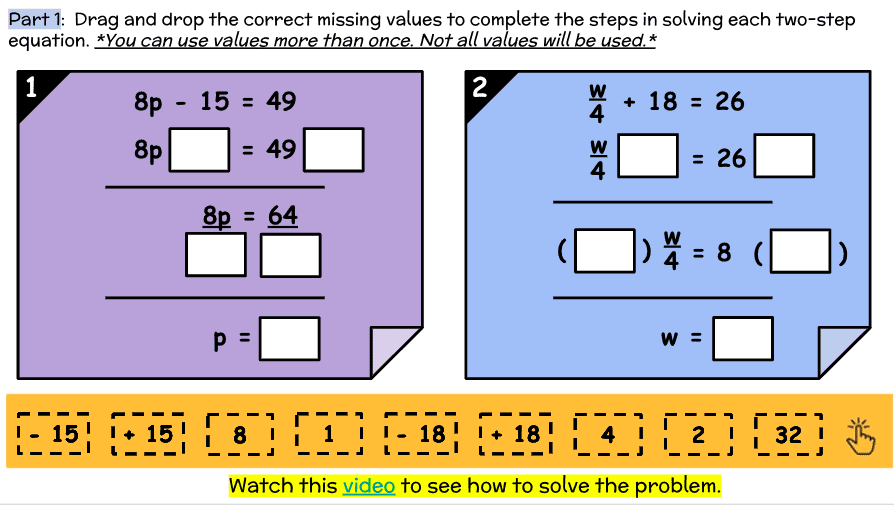
Hi 7th grade mathematicians! We learned how to solve two step equations today using addition, subtraction, multiplication and division. Remember that when we are solving for the variable you start with addition or subtraction and THEN you do multiplication or division.

Your assignment:

Create a copy of the Google Slides. Follow the directions below to fully complete the assignment. Make sure to watch the Loom videos to check your work.

Click here for your copy of the Google Slides assignment.

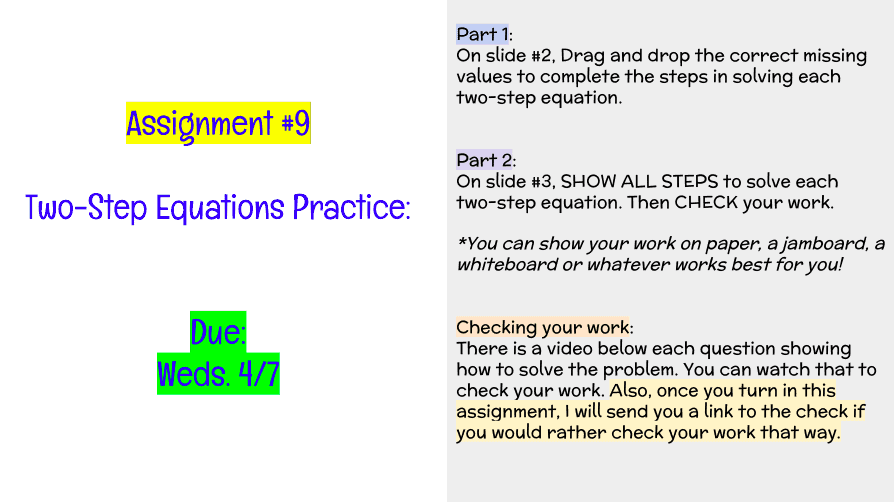
Part 1: On slide #2, Drag and drop the correct missing values to complete the steps in solving each two-step equation.

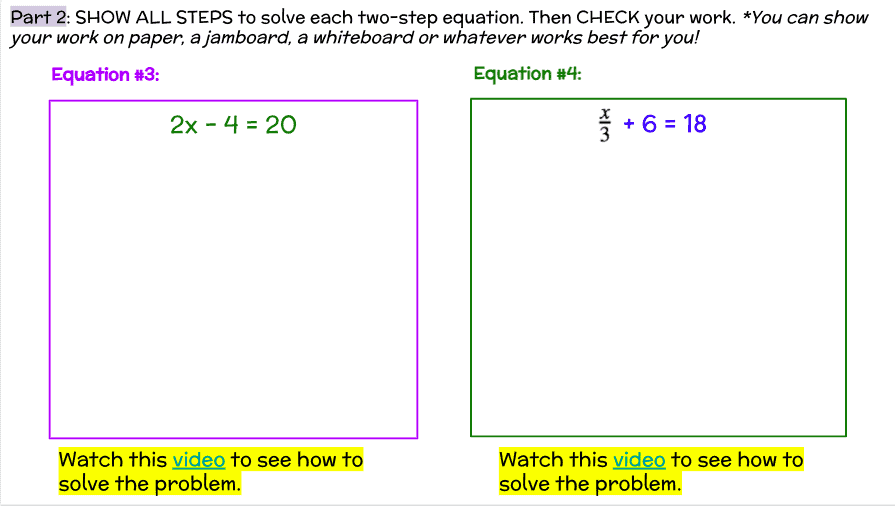
Part 2: On slide #3, SHOW ALL STEPS to solve each two-step equation. Then CHECK your work. *You can show your work on paper, a Jamboard, a whiteboard or whatever works best for you!

Check your work:

Watch this Loom video to check equations #1 and #2

Watch this Loom video to check equation #3

Watch this Loom video to check equation #4

Purpose & Other Uses:

These Loom videos allow for the students to see an answer key for each problem. Rather than just typing or writing the correct work the videos allow for the students to see each step on each problem. Because two-step equations have multiple steps to finding the correct answer, the Loom videos allow for students to see the steps and to rewind and pause if they missed a step on their work. You could also use Loom videos like this if you were doing a flipped classroom where you taught the students new content on asynchronous days and then did practice on synchronous days.

Are You My Mother?

I decided for my screencast I would read the story Are You My Mother by P.D. Eastman which as a kid was one of my favorite books. The video can be used to have kids follow along with the book or even used in a online classroom since its a little difficult to read picture books online and make sure the kids can see the pictures. I would use this screencast for either a kindergarten or 1 st grade class to help teach them their phonics as well as learning how to read simple sentences. Below is the video and the slideshow of the book as well!


https://docs.google.com/presentation/d/1ml2jN5Bsh04ZMU77alDz_2_2agmzEGi31LdqwigyFaU/edit?usp=sharing

Featured Image: Photo by Laurent Peignault on Unsplash

Future Substitute Folder

Target Student Group: K-2

Lesson Context:

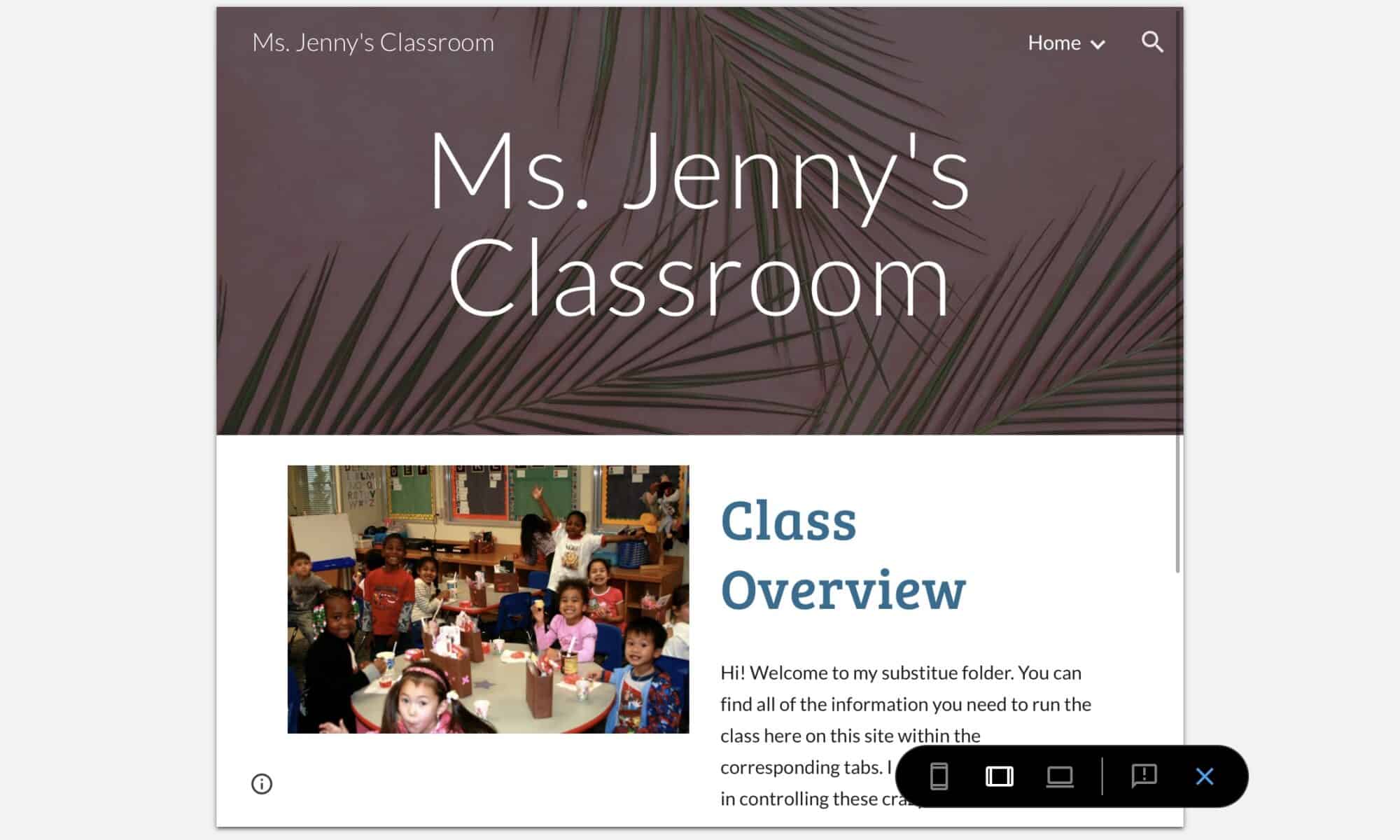
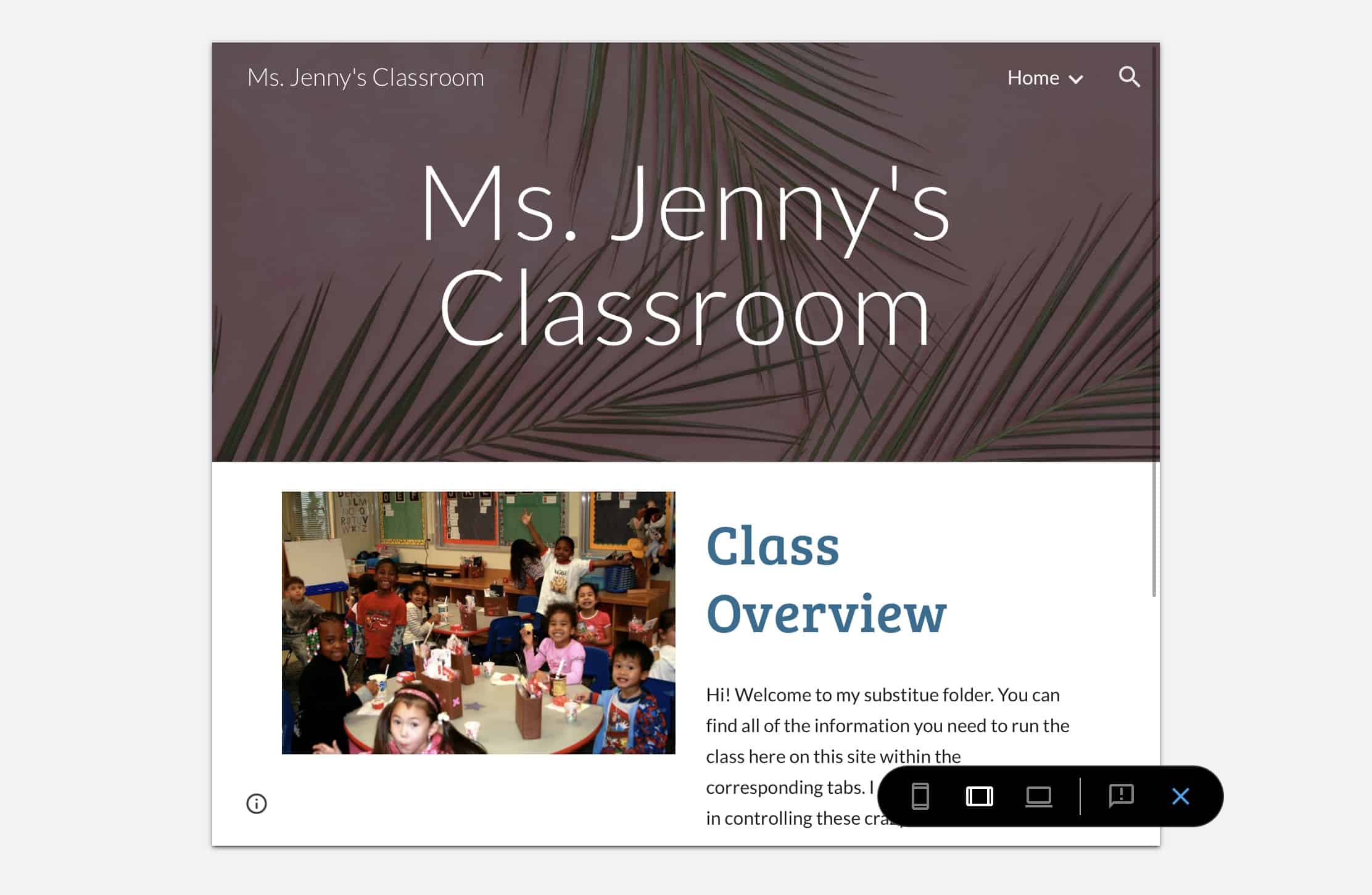
  • This Google site could be used in the future for substitute teachers to have all of their information all in one place. This site includes procedures, student information, agenda, bell schedule, and contact information. This lesson allows for an easier and more confident place a substitute teacher can access answers to their questions. This site is used as a template for a hypothetical classroom, which is why some spaces are blank.

Goal for the Lesson

  • The goal for this Google site is to better aid substitute teachers just in case general teachers can’t make it to school. Using a Google Site rather than a binder allows for easier access as well as easy manipulation.

Why Google Sites?

  • Google Sites is ideal to use because it is easy to embed other Google apps such as Google Docs or Google Forms. Google Sites allows other forms of media to be easily accessed as well such as YouTube videos or images. This site is easy to use and can hold a lot of information in a neat way.

You can access the site: HERE
https://sites.google.com/view/msjennysclassroom/home

Helping Maya! Part 3


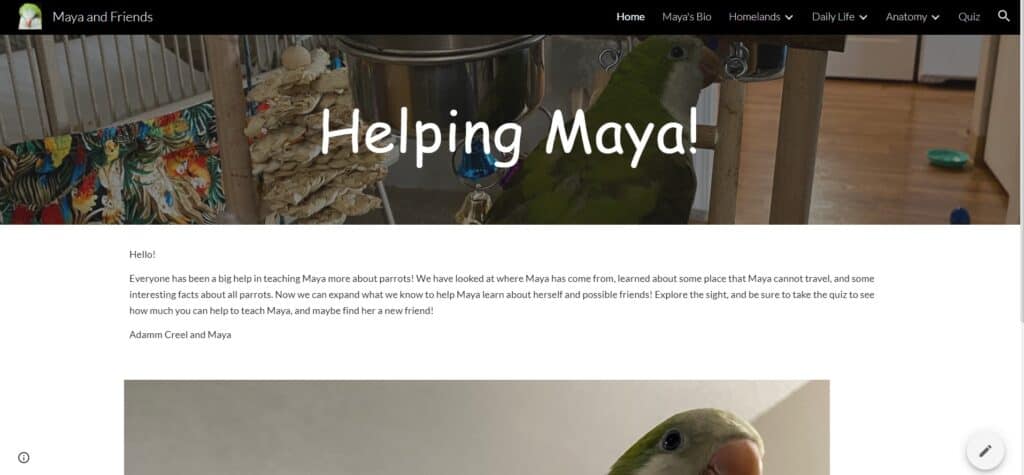
We are nearing the end of our Parrot unit, and have helped Maya gain lots of information about herself and other parrots, but there is still more to learn. Maya invites you to use her guide to help get information. While you explore the contents, think about which kind of parrot would make a good friend for Maya, and be sure to tell her in the quiz at the end! Click Helping Maya! or here to get started.


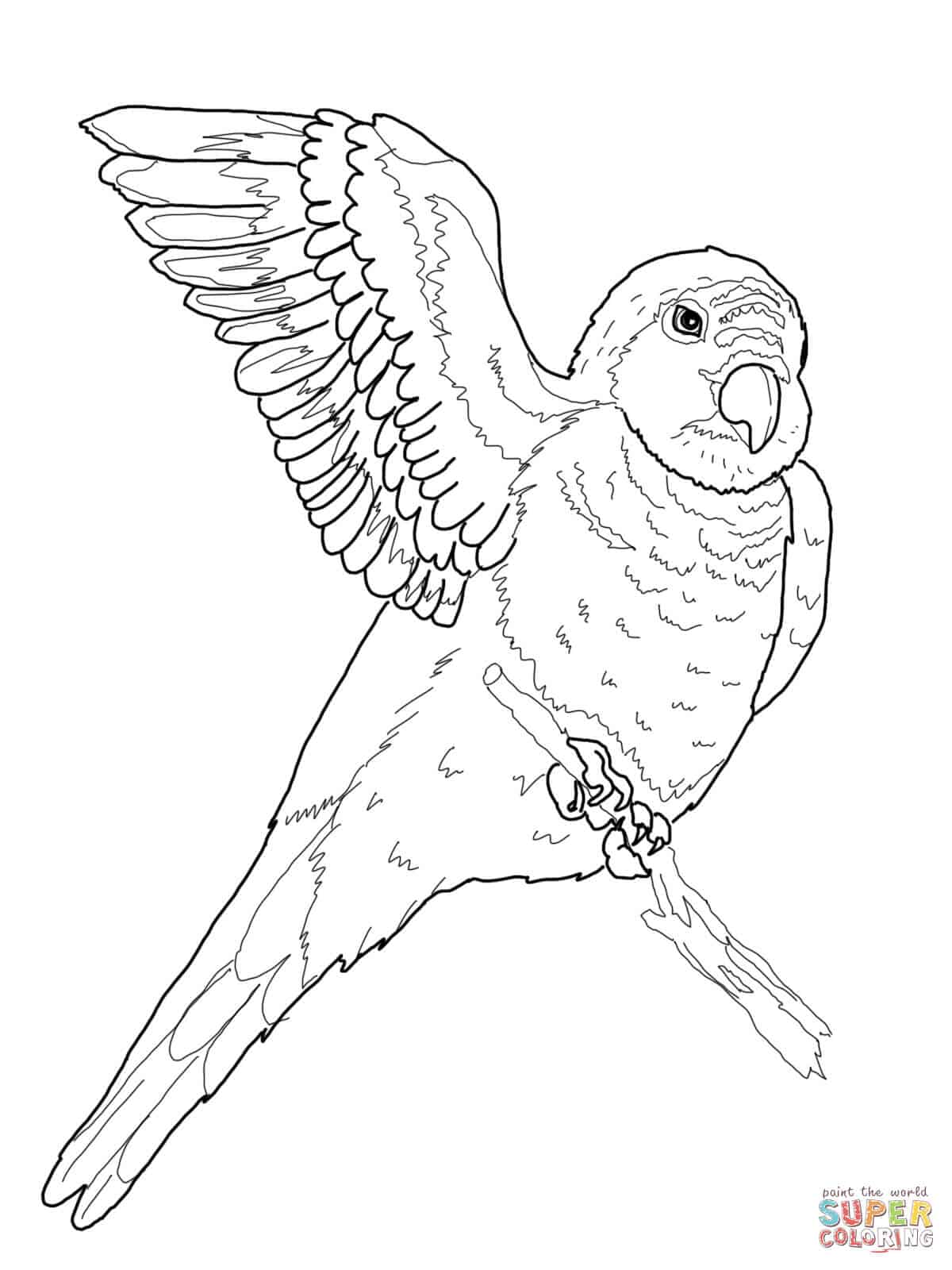
Maya invites you to also color a picture of her or a friend when you are done!

Color page courtesy of http://www.supercoloring.com under Creative Commons licensing.

Unsung Stories of WWII: A Google Sites Lesson

Lesson Title: Unsung Stories of WWII

Target Student Group: 9th Grade Modern World History class

Lesson Context: This lesson was taught in the middle of a unit about World War II in order to illustrate the key concepts they learned in the previous lessons, such as the alliances of the war, Pearl Harbor and Japanese internment.

Objectives for this Lesson:

  • Students will be able to describe the stories of underrepresented groups in WWII history and explain why they are significant.
  • Students will be able to read and summarize text relating to each story’s article.

Google Sites helps me to achieve these objectives because it provides one key place for the many different types of resources I need to give to my students. Especially because each group is working on a different story, it would be very confusing and difficult to send so many links in the chat function of our online classes. This site allows me to just send one link to my students for all the resources they need.

Click on the image below to view the lesson on my Google Site:

Women of the Italian Renaissance

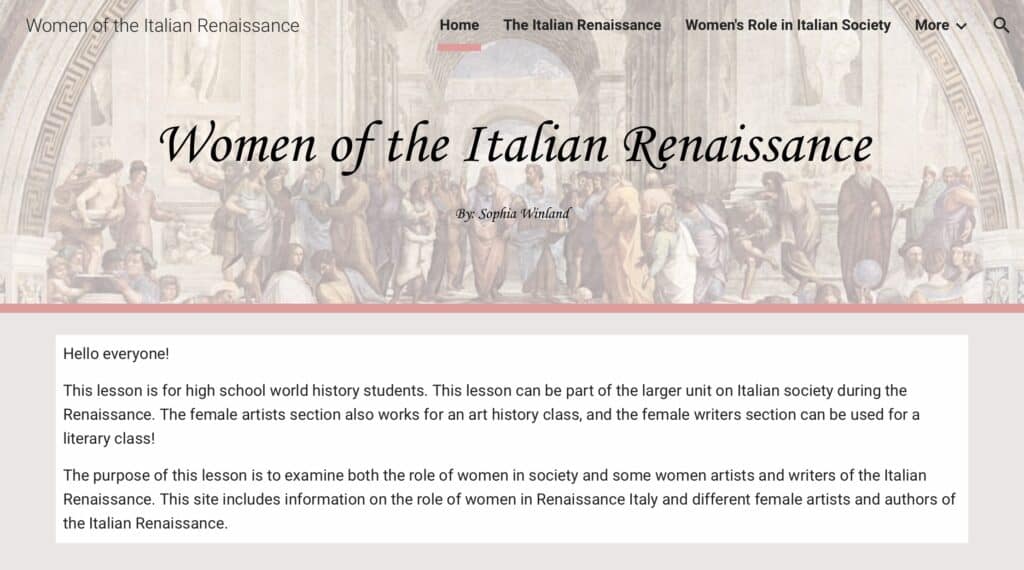
Hello everyone!

This lesson is for high school world history students. This lesson can be part of the larger unit on Italian society during the Renaissance. The female artists section on the site also works for an art history class, and the female writers section can be used for a literary class!

The purpose of this lesson is to examine both the role of women in society and some women artists and writers of the Italian Renaissance. The site includes information on the role of women in Renaissance Italy and different female artists and authors of the Italian Renaissance.

This image is linked to the website!

Photo Citations

Featured Image Photo by Shobha La Porta on Unsplash

Photo of Google Site by Sophia Winland

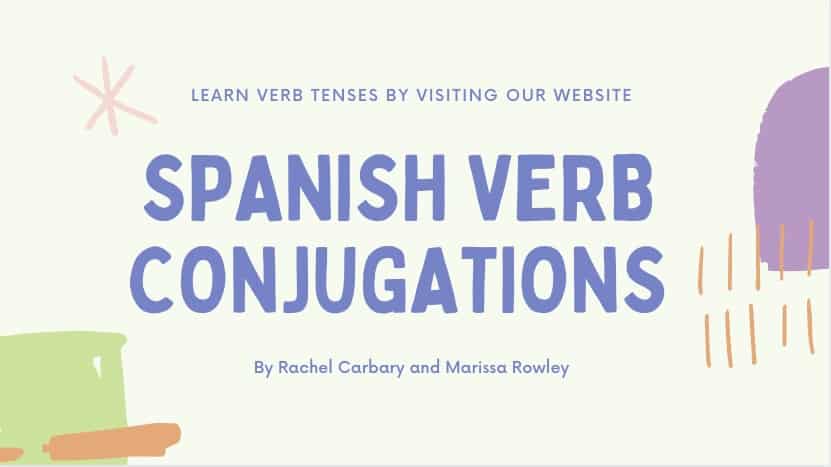
Explorando los tensos diferentes

Por: Rachel Carbary y Marissa Rowley

¡Vale niñes! Hoy vamos a usar un sitio hecha por Maestra Carbary y Maestra Rowley. Hacer clic aquí para accesarlo. Entonces:

  1. Tomar el pre-examen
  2. Navegar los lugares diferentes por el sitio. debajo “verbos” (presente, reflexivo, etc.) Estudiar las reglas y los usos diferentes.
  3. Jugar con los enlances por la pagina “Practica” para ayudarte.
  4. Tomar el post-examen.

Okay, students! Today we are going to use a site that Maestra Carbary and Maestra Rowley created. Click here to access it. Then:

  1. Take the pre-exam
  2. Navigate the different places on the site under the heading “Verbs”. (present, reflexive, etc). Study the different rules and their uses.
  3. Use the links under the “Practice” page to play different games.
  4. Take the post-exam

Goals

The goals of this lesson are to help students in third-year Spanish prepare for their final exam. In Spanish 3, a lot of time is spent covering the different verb tenses, their uses, and their conjugations. This can be very overwhelming and confusing for students. This website was created with the intention of helping students understand the difference between the different tenses. The pre and post quizzes allow students to see where they started, and how much they learned. by the end of their practice on the website. It also lets them see what areas they should study more before taking the final exam.
Geometry Proofs on Google Sites

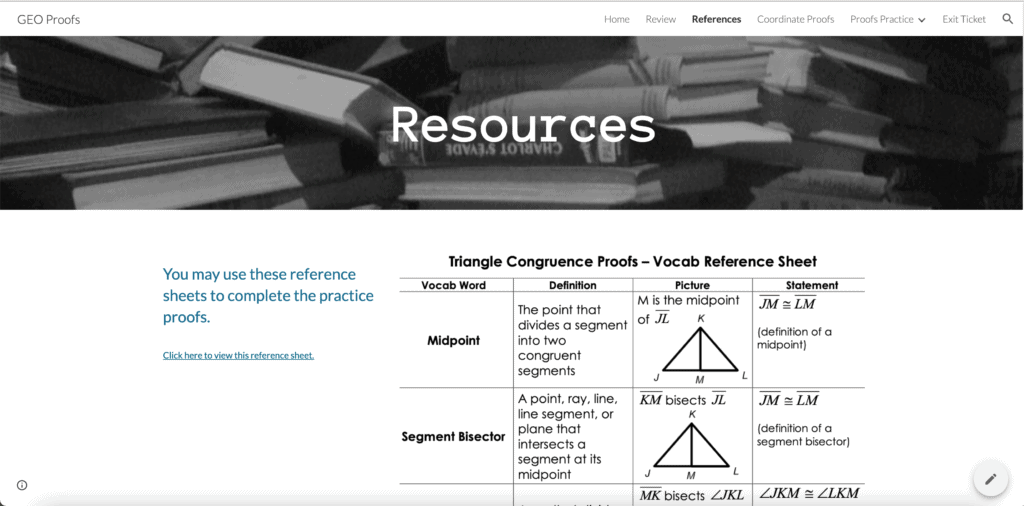
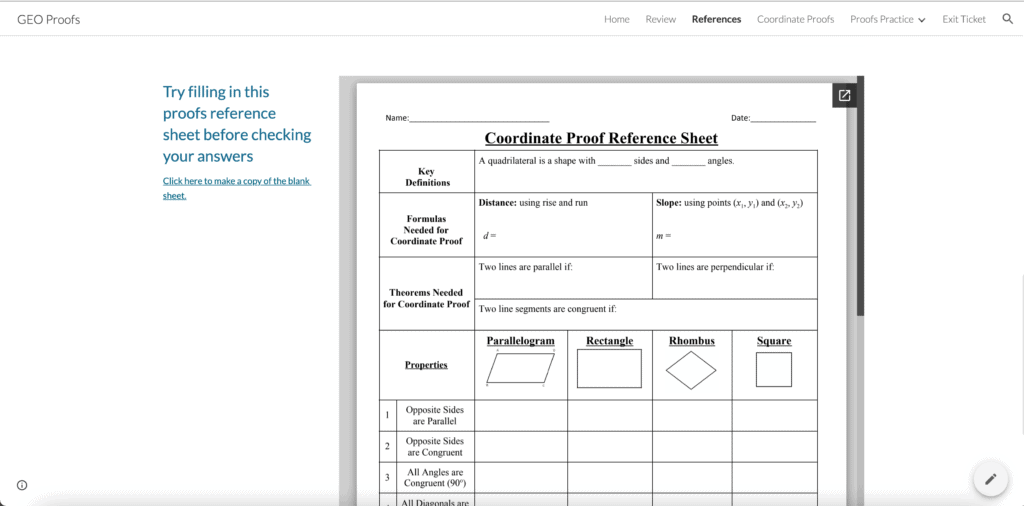
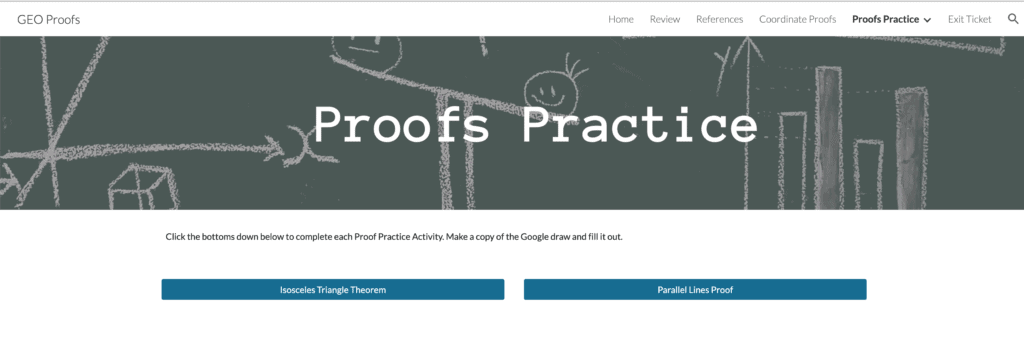
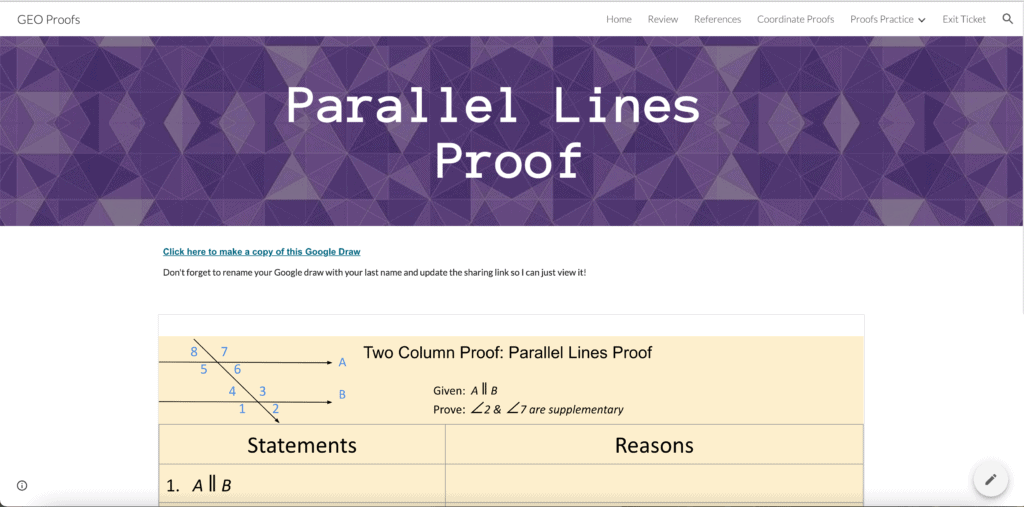
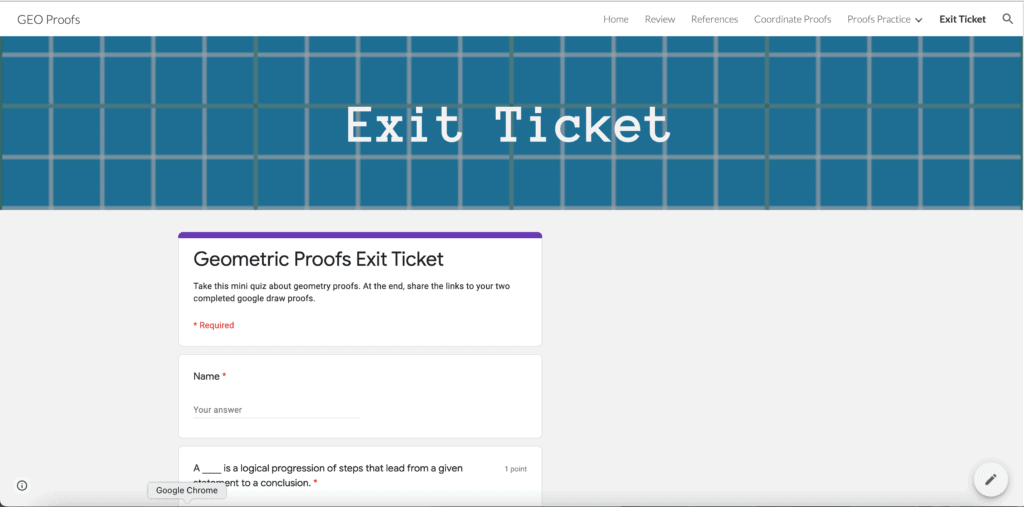
This google site is designed for a geometry class, 9th – 12th grade, as a practice and review activity for a proofs unit. The goal is for students to use the youtube videos to review and the practice assignment to test their knowledge. At the end there is an exit ticket to check students learning and for them to turn in the links to their work.

Click this link to go to the Geometry Proofs Practice Site

Featured image: Photo by Jeswin Thomas on Unsplash

Helping Maya! Part 2

Welcome again 3rd graders! Maya was very impressed with the knowledge about parrots that you all know! She is starting to find her place in the world, and again needs our help!


Habitat

Parrots live all over the world thanks to them being wonderful pets.

In the wild most parrots are found in the warmer areas of the Southern Hemisphere in places like Australia, South America and Africa.

Maya was born in Vancouver, Washington, and lives in Portland, Oregon. But where did her ancestors come from originally? Let us find out:

The green area shows where Quakers in the wild came from. You can see they are a South American species of parrot. Maya’s ancestors traveled very far for her to end up in Oregon.

But what about the red?

In some states in the United States, Quakers are banned from being pets. This is because Quakers are very hearty parrots and are seen as an invasive species, one that disrupts the natural environment. Because of this there are states that keep Quakers out. That is sad for Maya, because she likes to travel.


Other Parrots

Now that we know where Maya comes from, she would like to know about other parrots. Think about, and even look up information on other parrot species. Where do they come from? Are other parrots banned in the United States? Be sure to let Maya know what you find out next time!


All pictures of Maya taken by Adamm Creel

Helping Maya! Part 1

Welcome 3rd graders! We are starting a science unit to help our friend Maya learn more about herself and others like her. Even those different than her! Maya is a PARROT! A Quaker Parrot. Since she is only a year old, she doesn’t know much about herself, so it is up to us to help her out!


MEET MAYA

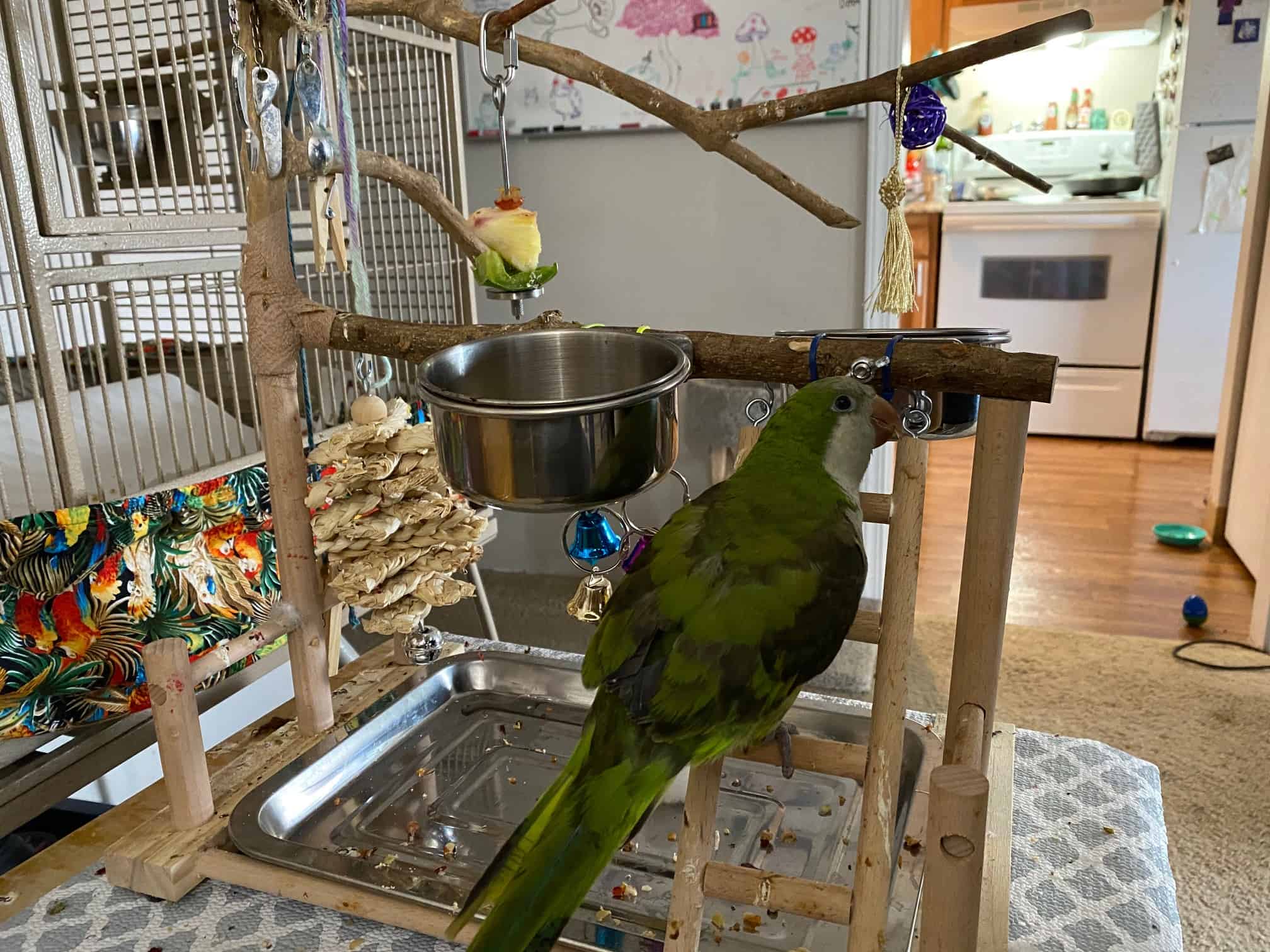
This is Maya. A one year old Quaker Parrot. She is young, and very eager to learn more about herself, and her natural habitat. Maya is a very talkative bird, in her own bird language, but is also working on using English words and phrases. Maya is a very intelligent bird. She loves to eat seeds, vegetables and fruit also. Sometimes she gets cheese and some meats too. Broccoli is her favorite food, and she will eat it every day if she can. Maya likes to play with lots of toys when she is not hanging out sitting on somebody’s shoulder.


Can you help teach Maya about parrots?

Take this short quiz on parrots to see how much you know. Don’t worry if you don’t know the right answer, neither does Maya, so it is a chance for us to learn together! And if you do know the answers, great! Maya really needs your help! The quiz can also be found here.


Here are some basic facts to get started:

  • The smallest parrot is 8cm or 3 inches long!
  • The largest parrot is 1m or 3.3 feet long!
  • Some parrots have the ability to mimic sounds they hear, even human words!
  • There are over 100 species of parrot listed as endangered!

All images of Maya were taken by Adamm Creel.

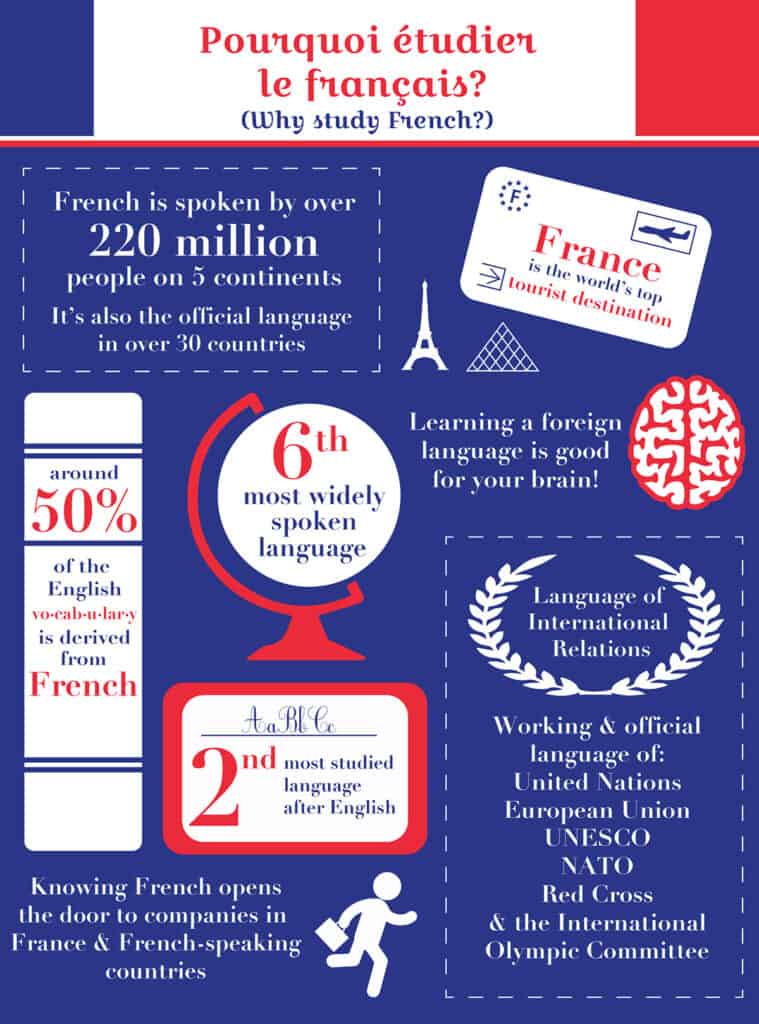
Pourquoi le français? Why I’m learning French

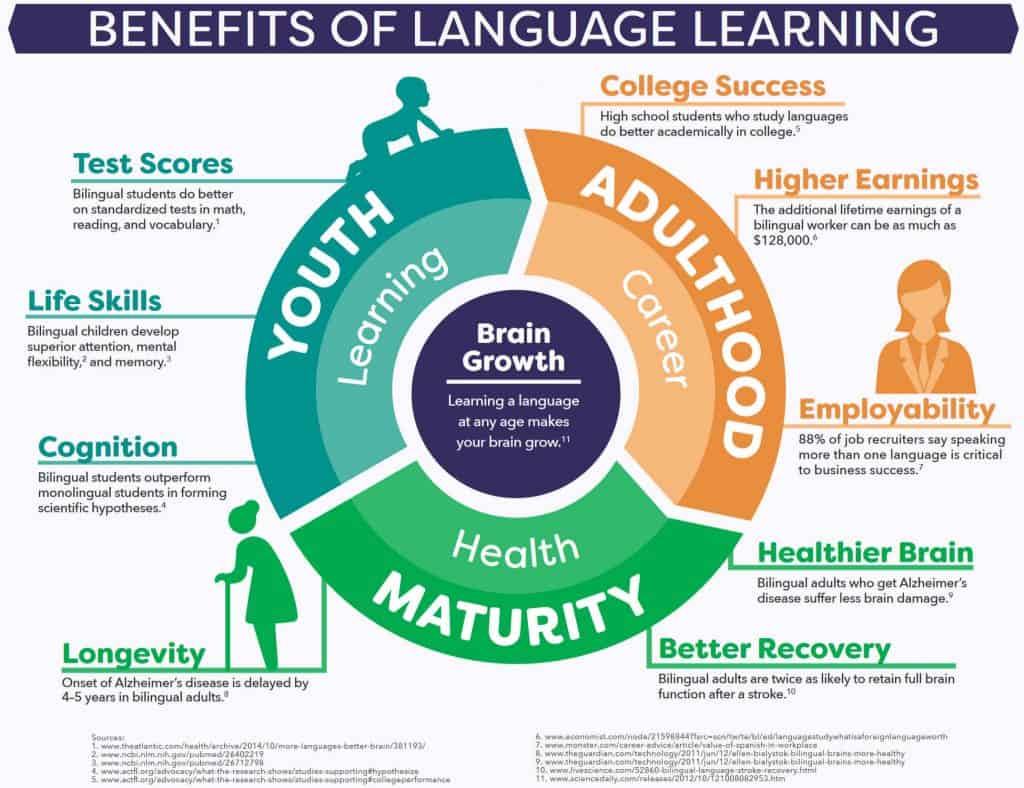
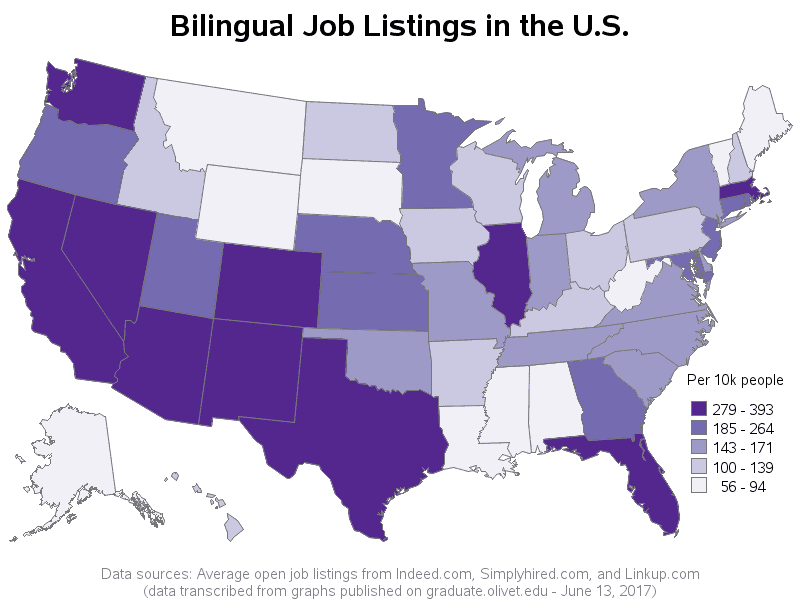
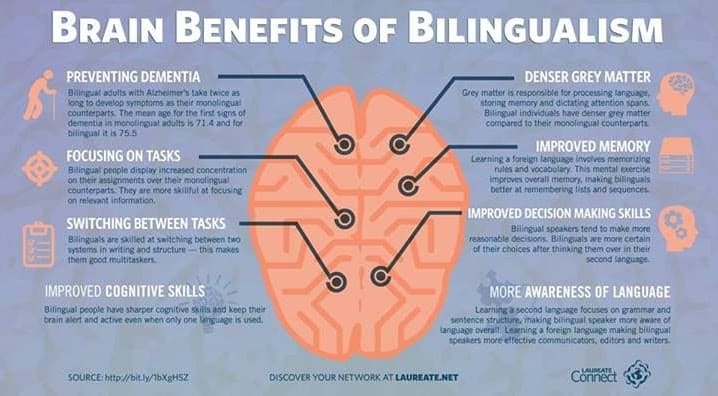
The website I created, “Advocating for World Language Education”, is designed as a way for students, parents/guardians, and the community as a whole to explore the purposes and benefits of learning a second language (whether it’s French or any other language). I want to incorporate this into a lesson at the beginning of the year with my first-year students to have them investigate why learning French will be a great thing for them! This will hopefully open them up to the versatility and benefits of learning another language regardless of their plans for the future and help them to become intrinsically motivated learners.

Goals:
-Students will be able to connect the value of learning a second language with their personal lives and explore how French can be an asset for them in their futures.
-Students will be able to research and articulate a clear argument for the value of them choosing to learning French.
-Students will be able to invest in their own learning and become more self-motivated by building links between the uses/benefits of multilingualism with their personal, academic, and professional goals.

Assignment:
Imagine your parents do not want you to learn French because it “isn’t useful”, unlike something like economics. Using the website below and its links to other resources, create a pamphlet or flyer to convince them that learning French is a great decision! Personalize it to your ambitions, your interests, and how French can be beneficial in your life (now and in the future). Include visuals (photos, charts, tables, data, etc.) to back up your arguments and try to rebut potential counterarguments. Why is French right for you and how will it be important in your life? What do you hope to do in the future and how will learning French help to get you there?

https://sites.google.com/view/advocating-for-world-language-/home