Whale Hello There!

This google form would be used in the classroom as a pre-assessment for a fourth grade unit on whales. This form will be given to the students at the beginning of the unit, so that I can gauge what the students know about whales and their interest level on specific whales. Since the students will have to collaborate on a cumulative project at the end of the lesson. I can see starting the students off, at the beginning of the unit, in a rotation; where they would learn more about the Ocean. To start learning about where whales live!

While one of the reasons of this google form is for me to gauge what students know. I also want the students to see what they know collectively as a class. If they were nervous because they did not know some things in the form; then they can see that others are also in the same boat as them. Another thing I want them to see is what whales they are most interested in. Therefore, we can start planning group activities within their whale groups. I hope that by grouping students by their specific whale interests, the groups will be more diverse in terms of academic levels and social groups. I want all students in the classroom how to collaborate with each other.
Featured Image by Todd Cravens

Let’s Talk About Health!

This post-assessment is intended for kindergarten students who have been learning about making healthy choices. The choice of lesson is based off of Oregon Standard: HE.7.K.1- Identify healthy practices and behaviors that maintain or improve personal health. In line with the standard, students are asked to read the questions and choose the healthier option. This post-assessment would be given in a 1:1 environment at the end of the lesson to see what information the students understand from the previous and current lessons. The use of the 1:1 environment would allow for the teacher to assist each student and answer questions when needed. Depending on the results of this post-assessment, the teacher can decide to move deeper into the lessons or refresh on the tested information.

Featured image by Silviarita on Pixabay

Multiplication CheckIn

I chose to create a survey to check on how my students are feeling about the math we are doing. The questions are meant for probably 2nd or 3rd grade and is meant to be a check in for me or another teacher to see how my students are doing with the multiplication concepts we are learning. This activity should be done individually so that I can reach all of my students. This would most likely be a exit ticket rather than a formal assessment. Each time my students answer no to the question, a video will pop up that explains the multiplication rule to them. At the end of the survey I allow them to write if they are still confused about so that I can know what I may need to review with my class or math topics that they are confused with that aren’t on the survey. By using google forms I am able to informally see how my students are doing with the material we are working on.

Prep to be a Kinder Kid!

colorful kids silhouettes and the word "Kindergarten" in colorful capital letters

This Google Doc is designed for preschoolers and their families to work together to prepare the student to enter elementary school. It acts as an introduction to concepts that children will greatly benefit from knowing before entering kindergarten. These concepts will hopefully not be entirely new to students as they should be exploring them in preschool, but something this format may be different than what they’ve worked with before. Ideally this would work best if each student had a computer and access to an adult, such as a small group setting during school and be accessible outside of school for students to work with their families.

By the end of the document, students should be able to cut with child safety scissors on lines, properly grip a pencil and write letters with it, know all the letters, and be able to count to at least 10. They will be exposed to phonics, sorting, small words, and audio of read along stories. They will also get practice following directions while learning to play games and following along in books when listening to the read-along stories.

The Google doc will help students achieve these goals by providing them with a variety of educational games to play, songs to sing, worksheets/activities, and videos to watch. All the game sights linked are great resources for other educational content when further explored as well, such as games for different subjects or grade levels.

Whatcha Reading?

Bookshelf

This form was designed with my current fifth grade placement class in mind. They are in the middle of a literature circles unit and are reading a variety of books in small groups. Since reading groups provide an opportunity for diversification of instruction they are something that I hope to include in my own class one day, and something I could create using this Google form.

The goal of this form is to help me understand what kind of readers my students are in order to help better place them with readers that are at a similar level and have similar interests. The students would fill out this form as an introduction to the unit, and I could then use their responses to create appropriate reading groups for the students that best address the needs expressed in the survey. Having all of this information in a digital format makes it easy for the teacher to keep track of, and even refer back to at the end of the unit, seeing areas where the students may have shown improvement by the end of their reading circle. The students could fill out this form in a variety of ways: it could be assigned as homework, thus allowing the students to respond on their own devices at home, or it could be done in class in either a one-to-one environment, or on a classroom computer which the students could take turn using.

Featured Image by Lubos Houska from Pixabay

Miss Cromwell’s Fabulous Third Grade Class Website

This is a website that I created for my third-grade class in order to stay connected with them and to give them some great online resources! I really enjoyed creating this, and I plan on using it when I have my own classroom and maybe even during my student teaching year! I think this is a fantastic way to keep students and parents updated with upcoming events, deadlines, and assignments. In the future, I will add school resources like the lunch schedule, where to apply for free and reduced lunches, and more! I included a lot of assignments that I created on the website, so have fun navigating through it if you wish!

Let’s Talk about Plants and Animals!

pictures of birds and deer and plants

This google form was designed as a pre-assessment for a kindergarten science lesson on animals and plants. The lesson is based off of the following Oregon Standard: K-LS1-1 – Use observations to describe patterns of what plants and animals (including humans) need to survive. In line with the standard, this pre-assessment addresses what animals and plants need to survive. This form gives the teacher information on what students already know prior to this lesson so that they can adjust and differentiate the lesson accordingly. For instance if the whole class already knows what plants and animals need to survive, then the lesson can change into a discussion comparing the two. If there’s a lot of variation in what students know, the teacher can set up learning centers with different activities.

Ideally, this pre-assessment would be given in a 1:1 environment at the start of the lesson so that the teacher could see where all their students are at. However, with some planning, this pre-assessment could be incorporated into learning centers prior to the science lesson so that the teacher still gathers the data on what students know and adjust the lesson accordingly. One thing to keep in mind if this pre-assessment is given during learning centers is that the assessment does not have audio for the questions. Since many kindergartners cannot read the directions for the questions, the teacher can either explain what the students will do when they reach that learning center, facilitate that learning center themselves, or have an adult volunteer/faculty member assist students at that learning center. If the pre-assessment is given in a 1:1 environment, the teacher can explain the directions for each question and answer questions as the students take the quiz.

Image Credits:

Photo by Christopher Rusev on Unsplash

Photo by Chanan Greenblatt on Unsplash

Image by Selling of my photos with StockAgencies is not permitted from Pixabay

Can we guess, does it rhyme?

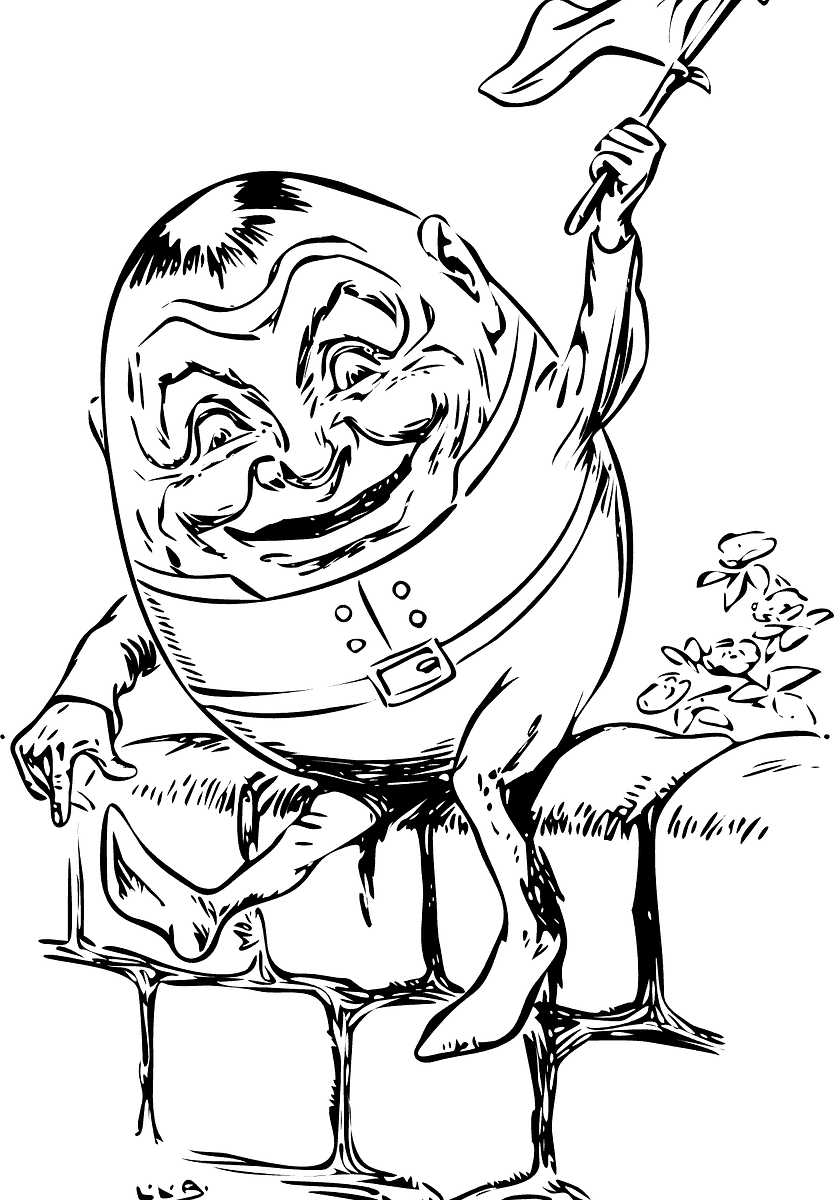
Picture of Humpty Dumpty, refunding a popular nursery rhyme

This activity is intended for early elementary grade students who are working on rhyming and finding patterns to understand why words rhyme! *independent use: 1st-2nd — note: students may require a tutorial on how to use the forum. It may also be easier to have student complete the assignment in small groups at a time that way an adult is able to help with any technical issues they may have in filling out the google forum.

This could be used as a pre-assessment to gauge what your students already know about rhyming or if they are already able to pick up patterns. It can then be used as a post assessment to see how much growth has happened at the end of a lesson or unit on rhyming. This activity could also be used within a kindergarten classroom and completed as a whole class in order to introduce the concept of rhyming.

When used as a pre-assessment, students in 1st grade are not expected to have a high knowledge of rhyming patterns. However, when being used as a post assessment students should have a better understanding of deciphering which words rhyme and which do not.

Featured photo: Pixabay

First day Survey

Bookshelf
  1. This lesson could most effectively used for 1st-3rd grade. It could be used in the beginning of the year in any school/course.
  2. This would be used an introduction lesson. Something you give out on one of the first days of school to get to know your students. You could even send this out prior to the first day of the school so parents can help students fill it out if they need it.
  3. I think this would mostly be an independent thing or a whole class time to work. Of the students are olenough and capable of completing it on their own then it would be independent for. If they were younger would do it as a whole class activity where the teacher demonstrates it and completes it with them.
  4. The teacher would going feedback about their students which would help build relationships. It would also help them learn how to help their students learn best.
  5. Google forms will be used for the survey so they can complete it on there.

Multiplication Madness

This is a review for my third-grade students as we get back into the groove of things after Spring Break! I want my students to go back into things slowly and not all at once so they don’t feel overwhelmed. Students will need to have a device to do this on their own at home to review. This review will give me key information in regards to what we need to revisit or if we can move on.

Fun Fraction Facts!

Numbers on ground in the hopscotch form

I have created a fractions pretest for my third graders. This is to test their knowledge about fractions before we move onto more complex fraction practices.

I would ideally have all the students use a computer to take the pretest at the same time. I think this would be a fun and creative way to incorporate technology into the student’s math time. The students should be take this quiz relatively easily given that the google form is quite straight forward. However, this pretest would be an easy way for me to get a sense of how well my students understand the topic of fractions.

There are several standards that fit with this lesson. Which includes the following common core standards.

  • CCSS.MATH.CONTENT.3.NF.A.1
    Understand a fraction 1/b as the quantity formed by 1 part when a whole is partitioned into b equal parts; understand a fraction a/b as the quantity formed by a parts of size 1/b.
  • CCSS.MATH.CONTENT.3.NF.A.3.B
    Recognize and generate simple equivalent fractions, e.g., 1/2 = 2/4, 4/6 = 2/3. Explain why the fractions are equivalent, e.g., by using a visual fraction model.

Hopefully, I would be using google classrooms, therefore the students will be comfortable with the google layout. I would also make other activities that include google doc/ google form for this unit on fractions. I think this is the best way to engage students and change it up from the usual worksheet.

After they take the quiz, we will review the questions that were commonly missed and then begin the lesson!

Featured Image

Washington D.C Historical Tour

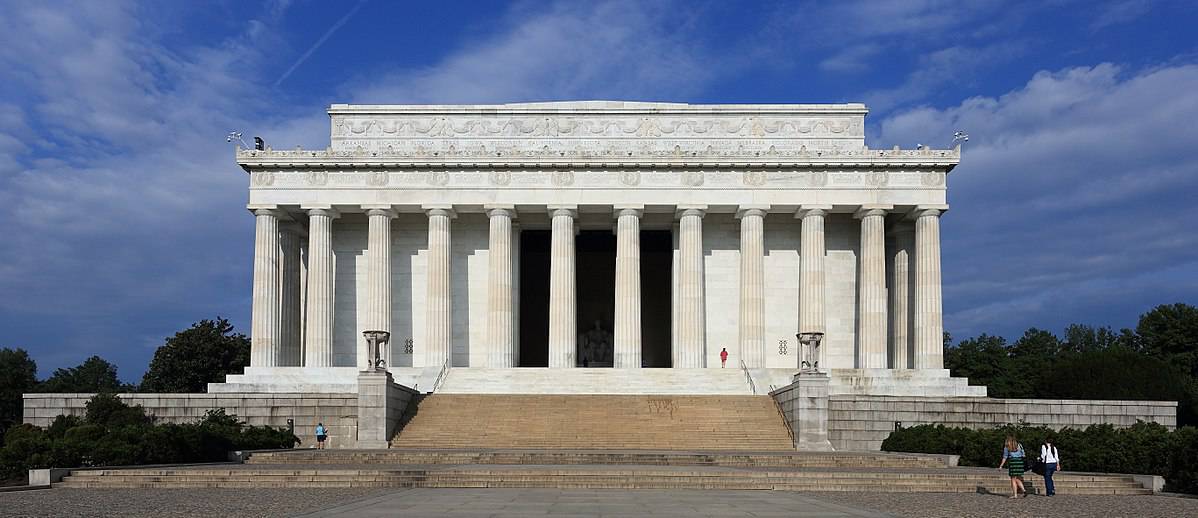
This is a tour of the National Mall in Washington D.C. The Mall is composed of museums, monuments, memorials, and government buildings. With this map, I want students to be able to explore all of the different aspects of the Mall. If students are not able to physically go there, then they can still see what is around. Or if we are able to plan a trip to the Mall, then we as a class can plan where we want to go and how we will get around.

I believe that this would be a great resource for students when they are learning about American History. Broken up by layers on the map, students can be broken up into groups and they can research different aspects of the mall: the government buildings, monuments and memorials, and museums. Through this research students can deep dive into why these aspects or specific parts are included and why they are important to American History. Each students will become their own expert in the specific part that they research, and can share their findings with the rest of the class.