Okay Students Now Let’s Get in FORMation!

Just a head’s up, this is a late post from the week we focused on Google Forms (as you can probably tell by my title). This has nothing to do with Google My Maps!

My first Google Form (the branching form) would be used as a sort of check-in. It’d be very simple: I’d distribute it every Monday to get a weekly pulse on how students are feeling, how I can help them, etc. I started off the form with a few fun questions simply asking for their opinions of things. And then I ask if they feel like a “good nut” or a “bad nut.” And these would be terminology that we’ve been using throughout the year to describe how we feel. Then the form would go on to different sections; One section would be for those who picked the bad nut and the other for those who picked the good nut. This would be used for elementary students.

My next Google Form is the self-graded quiz. I would have students read the book Guns, Germs, and Steel by Jared Diamond, probably over a long break like Summer. Then I would test them on the big-picture content of the book using this Google Form. I would do this specifically for AP World History high school students.

I think that there are a ton of things you could do with Google Forms. I’ve definitely used it for all sorts of academic purposes, from quizzes and attendance to getting a pulse of the classroom and sign-ups. If you’re planning on doing elementary education, it would probably only be useful for 3rd graders and up, unless the form is very, very simple. Otherwise, I don’t think it’s the best tool for the really young kiddos. I think that secondary education teachers would find Google Forms especially useful since older kids can more easily navigate through it on their own without getting lost/confused.

Featured Image: Photo by ActionVance on Unsplash

Mission Mapping

Photo by David Vives on Unsplash

Target Student Group: 4th grade, social studies & math

Instructions for students: Take time to explore this interactive map, which shows the 21 California Missions. Each location on the map shows one of the missions and includes a short description, photos, and even videos. While exploring the missions, pick your favorite one because we will be making dioramas of them in the next few weeks. But for now, start exploring the map.

Also, pick 5 pairs of Missions that are adjacent to one another. For example, Mission San Juan Capistrano is adjacent to Mission San Gabriel Arcángel. Using the map, see how many miles apart they are. These two missions are 27 miles apart. Then, we will do some math with this. If it took you 22 minutes to walk one mile, how many hours would it take to walk between these two missions? Multiplying 22 minutes/mile by 27 miles gets you 594 minutes or 9.9 hours (which you get by dividing 594 minutes by 60, which is the number of minutes in an hour). Now, repeat this process but pick different pairs of missions that are adjacent to one another and find out how long it would take to walk between them based on how far apart they are and based on a 22 minutes/mile walking pace.

Goal for the lesson & how MyMap helps meet that goal: The goal of this lesson to teach students about the California missions, which is a key element of the social studies curriculum for California 4th graders. This lesson also gives students multiplication and division practice which is very important in 4th grade. This map helps meet these goals by engaging students in the content, giving them resources to learn about the missions, and having them practice math skills with an element of choice (since they get to pick which adjacent missions to solve with).

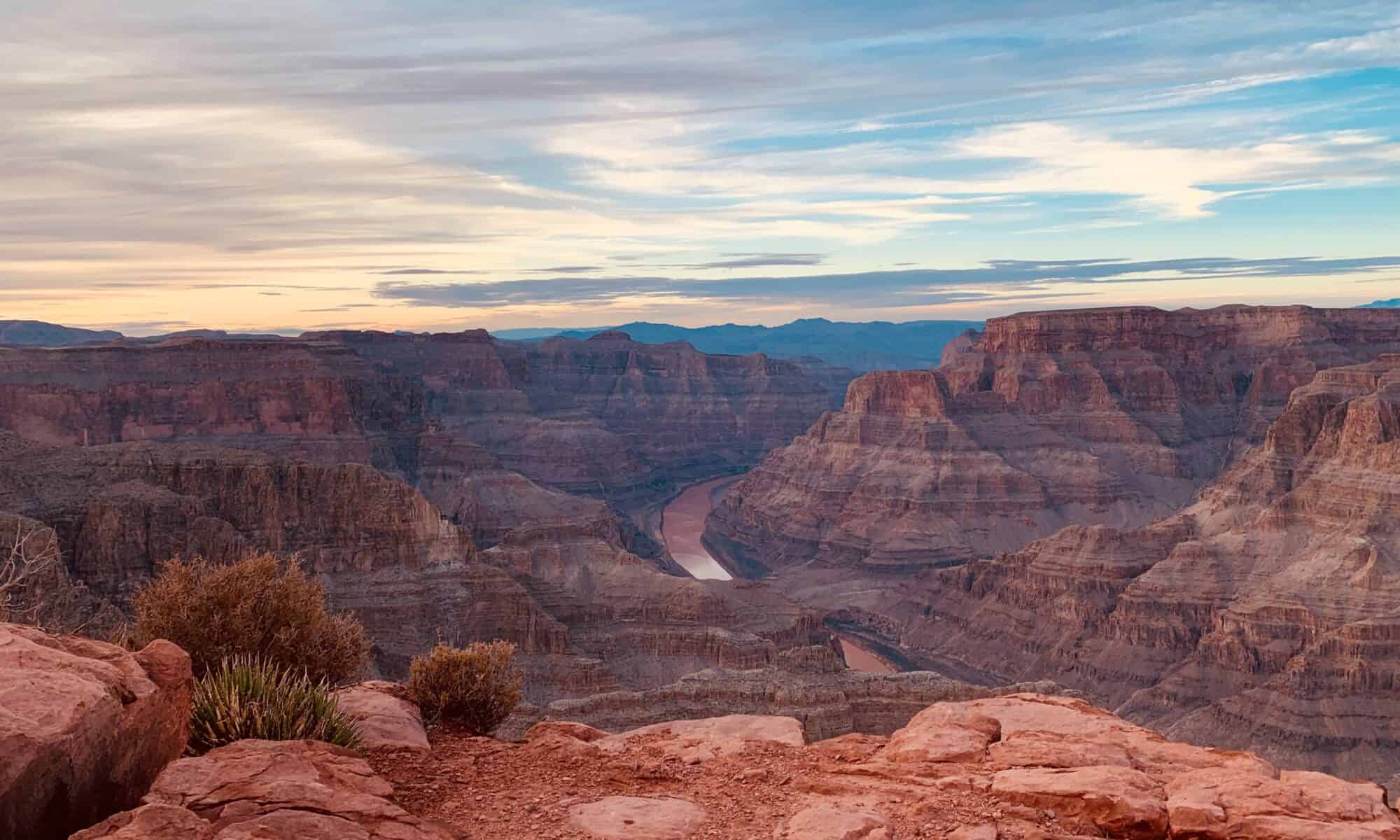
Let’s Take a Trip to the Grand Canyon!!

Grand Canyon Photo by Tim Hart on Unsplash

Target Student Group: 1st Grade

Instructions: Students will listen to a read aloud of Grand Canyon by Jason Chin. The students will then share with the class an interesting fact of what they learned through the read aloud. The students will then gather around the carpet and we will go on a virtual field trip to the Grand Canyon as a class.

Goal for this lesson: Students will learn about the geographical features of a canyon and explore the largest canyon in the United States. Google MyMaps helps meet this goal by letting the students explore the natural wonders of the Grand Canyon.

YouTube Read-Aloud:

Grand Canyon Virtual Field Trip (Google MyMap):

Understanding plot structure

Context of the Activity

This lesson is designed for a fourth grade class who has already had some experience with working with and understanding typical plot structures in literature. Students will have already read a fable as a class and discussed where certain plot structures show up within the story. At the start of the lesson, they will watch an Edpuzzle video that reviews plot structure.

Instructions

The students will begin by watching the Edpuzzle and answering the questions integrated in the video. Afterwards the class will have a discussion about the different questions. Then, the teacher will pass out a worksheet which has a clear visual that represents a typical plot diagram, with blank spaces next to key moments on the diagram. They will then fill in key moments from the story that relate to each spot on the graph (setting, rising action, climax, falling action, etc.). Having a clear visual to show them the literal rising and falling action will be much more useful than simply having them write out the order of events in the story.

Link to Edpuzzle if embed isn’t working: https://edpuzzle.com/media/623b6ff4d66b484291e9959d

Swimming Through the Water Cycle

Target group: 5th grade during science block

This BrainPop video will be watched by a fifth-grade classroom as an introduction to the water cycle. Although they might know some of these concepts and words, they will be learning about the different aspects of the water cycle and how it connects overall. There will be follow-up lessons going into greater depth of the water cycle, but this will help them get a basic idea. There are a series of both multiple choice and short answer questions for them to answer throughout the video.

Instructions:

After engaging in a water phenomena video, students will engage in a brainstorming session about how the water cycle works. After the discussion, students will open their laptops and engage with the video and questions.

Watch the video here if the embed does not work.

Practicing Kindness

This social emotional lesson would take place in a Kindergarten/ first grade classroom. It will be taught after the Second Step lesson on kindness to give students extra practice noticing kind acts and recognizing how being kind makes a person feel.

“Okay class! Today we’ve been talking a lot about kindness through our Second Step lesson and with some of the books we’ve read aloud. Now I want each of you to practice what we’ve learned on your own!

Please get out your iPads and click on the assignment for today. You’re going to watch a fun video and answer the questions as they come up. Some questions ask you to choose the right answer and some ask you to click the microphone and give your own answer. Listen to the instructions and raise your hand if you have a question. Ready…. Set… GO!”

Direct link to Video Here: https://edpuzzle.com/media/623aa9ad6b1c2a42e89b41cb

Needs VS Wants

Grade Level: First Grade

Activity: This is a first grade Economics Social Studies lesson. Students will be watching a video on EdPuzzle that discusses the differences between “Needs” (Shelter, Food, Air, Etc.) versus “Wants” (Cupcakes, Cars, Toys, Etc.) While the students watch the video there will be multiple points in which they have the opportunity to answer both open ended and multiple choice questions. After hearing about needs, students will be able to either write or say something that is a “need” in their lives. In addition, students will be able to name a “want” in their lives after wants are described. Then, the video will show different examples and there will be a section in which students are able to chose whether something is a need or a want. After the video is watched, the students will complete a “Needs vs Wants” sorting activity in which they cut out different pictures and glue the pictures under either the “Need” section or “Want” section.

Instructions:

  1. The teacher will open the lesson with a review on the previous economics lesson and then discuss the new topic of “Needs” versus “Wants”
  2. After the lesson begins, the students will be able to watch the EdPuzzle on “Needs VS Wants” on their school provided electronic devices (Chromebooks, iPads, etc.)
  3. Students will watch the video and answer the questions, as they are prompted throughout the video. Within EdPuzzle, the students will not be able to continue through the video until the questions are answered.
  4. After the video is watched and the students answer the questions on the video, they will be able to complete a sorting activity on needs vs wants in which they cut out pictures and glue them on the correct section.

View “Needs vs Wants” video below!

If the embedded video does not work, click on the EdPuzzle link here.

Exploring Diphthongs

Letter photo by Jason Leung on Unsplash

This lesson is for first-grade students to practice what they have been learning in their phonics lessons with diphthongs.

First, as a class, read the book Look by Fiona Woodcock to review the diphthong /oo/. This book is composed strictly of oo words. If you are reading the book to students, read the first few pages without introducing the pattern and see if students catch it on their own.
Here is a read aloud option if you do not have the book:

The reading starts at 2:50.

After the read-aloud, have students stand up to sing along to the Jack Hartman video. Instruct students to sing along the first time and move their bodies as they would like. Remind them that the second time they watch it they will get to practice diphthongs on their iPad.

After watching the video once as a class, students will go to their iPads to record themselves saying each diphthong and reading the words back using the voice recording feature on edpuzzle. The voice recordings are during the second half of the video so students have another chance to hear the words before repeating the sounds back.

Here is a link for the video in case the HTML embedded link does not work.

After students have finished their voice recordings for diphthongs, have them return to the carpet and thing of words that fit under each diphthongs /oi/, /oa/, /au/, /ue/, /oy/, /ow/, /oo/, /ew/. The teacher should record students thinking for each word and the anchor chart can be displayed in the room for students to reference and add to in the future.

Japanese Sentence Structure Practice!

I decided to try a Japanese language lesson for this post since I’m also interested in teaching Japanese one day! Since there’s no specific grade level for learning a foreign language, I decided to make my lesson based on a high school 1st-year Japanese class. The video I created for this post will be a supplementary video for students having trouble learning the basic sentence structure of Japanese.

今日は皆さん!This week, we focused on the basic sentence structure of Japanese and learned the abbreviation “TTPOV” which stands for topic, time, place, object, and verb. I know we’ve been rushing through this lesson, so I understand if there is still some confusion on sentence structure.

Over the weekend, please watch my review video below and use this Google Drawing to follow along! After you’ve watched it, create three unique sentences using TTPOV. You can use the words I supplied in the word bank to get some practice first, but please use your own vocabulary for your three sentences and get creative with it! 頑張って下さい!

I hope you have a restful weekend! I’ll see you in class on Monday! !お疲れ様でした!じゃまた月曜日:)

Photo Credit: Photo by Angga Indratama on Unsplash

Establishing Classroom Community

Grade: 3rd

I chose to make a video on Adobe to show first week of school for classroom expectations.

It can help students to see visuals to understand what they should do.

Class will watch together and then at the end students will share what expectations they would like to add to create a collaborative classroom community.

Direct link to Video:

Featured Image: Jernej Furman on Flickr

Let’s Learn Photosynthesis!

This activity is meant for a 1st grade science class

Context: This is an Edpuzzle that the teacher will do with their class. Because it is a little bit more advanced and there are some bigger words, I’d suggest to do this in a classroom with more TAG students who are ready to tackle more in depth parts of the plants. Something like this would not be used as an introduction activity to the unit, I think it would be better to do when students have some idea of what photosynthesis is but while still unaware of the specific parts of the plants that are involved.

Instructions: Students will click on this video and will be told to pay close attention because there will be interactive questions throughout the video. Students will be responsible for going through the video and correctly answering questions that they are asked.

Direct link to video HERE.

Where is it?

Grade level: Kindergarten

Activity: The activity the students will be doing is on Edpuzzle. They will watch the video “on/in/under practice.” During the video, students will be shown a picture of an object on/in/under and they will need to complete and answer the multiple choice question in order to keep moving on in the video. This will help the teacher to see how well his/her students understand on/in/under. After the video is completed, another activity that I would like to do is have my students create their own on/in/under drawings and test their classmates. This will allow them to use their creativity along with practicing these skills more.

Instructions:

  1. The teacher will do a lesson on, “on/in/under” and what each of these prepositions are and how to appropriately use them.
  2. After students have a better understanding on this lesson, students will watch the video on Edpuzzle on their own electronic device (provided by the school).
  3. Students will be told to complete the “on/in/under practice.” Students will not be able to move on in the video if they do not complete the multiple choice questions after each picture in the video is shown.
  4. After students complete the video they will be instructed to create their own drawings of showing the prepositions of “on/in/under”. Students will have class time to work on this and if they do not finish they will take it home as homework so that they can bring it back the next day to share and test their classmates.

If you are not able to access the video above, use this link!