Before entering this course; I felt that I had a relatively decent grasp on the different forms of technology that may come up in the classroom. However, by the end I have learned so much about different facets of technology that I can safely say that I’ve been proven wrong. A classroom has far more possibilities to have technology integrated into it than a simple Power Point or YouTube Video, and my Portfolio is evidence of this.
Being introduced to Word Press was an interesting start to the class. Setting us up with the tools we needed to present with others about what we covered, and how much we have learned. I think that taking an active role in the creation of a living website was really interesting and hope to try to create something like it later in my life. This being said, the post above was my introduction to WordPress, and the story of how I worked my way up to teaching throughout my life.
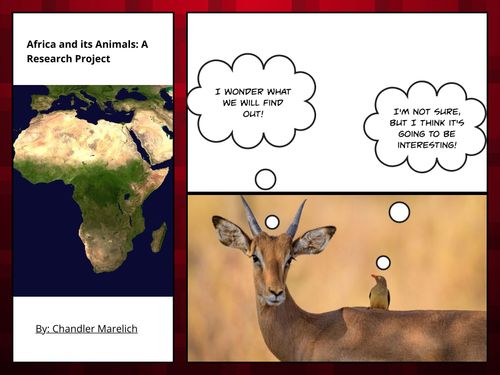
In this post, I have created a book using Book Creator. This book is a set of visual instructions for students in 2nd and/or 3rd grade in order to create a research project based on an animal of their choice that lives in Africa.
This post was primarily on explorations in AI (especially ChatGPT) within which I used an assortment of AI models to create images, as well as help create lesson plans for a 2nd grade classroom. Having never thought to use AI in this way before, I thought it was fun being able to go through and get advice for lesson plans from the AI itself or just gather some ideas from it as well. I have since continued to use this AI as a way to come up with ideas in order to build off of when creating lessons or art with my students.
By Ashley Eala, Chandler Marelich, and Justin Matsuura
This is a professional development lesson for educators to learn how to use Book Creator and Google Slides to assess students’ research on a specific topic within a teacher-decided field.
The main goal of this presentation is to give educators a range of assessment tools they can use with upper elementary to middle school students. Educators will learn how they can use two different online platforms as a way for students to present their learning and use various online research tools. These assessment tools will show educators how well students can gather information and sum up their findings into an organized presentation.
To help educators gain a better understanding of how to use Book Creator and Google Slides as an assessment, we created instructional examples for students using each online platform. The Book Creator assessment is an example of how 3rd graders can make a presentation on animals in Africa, and the Google Slides assessment is an example of how 5th graders can make a presentation on countries in Africa.
Book Creator and Google Slides are great tools for educators to use in their classroom. Students can share their work with educators, and students have the ability to express their creativity using these different formats for their presentation and built-in search tools for images. The research tools available to students to find information for their presentation, such as Kiddle and World Factbook, give students the ability to have more accessible and specific information for their topic.
April 19, 2033

Dear former me,
It seems like only yesterday, I was at UP.  It was the spring term, 2023.

So much has happened since then …

You did an amazing job with PACE out in Fairbanks. You were provided a difficult challenge in an area you were completely unfamiliar with and you tackled it with grace. You were able to keep those fifth graders in check, and in the end, it was a valuable learning experience not only for them, but for you as well.
You learned about the challenges of teaching with no team, you learned about moving to an area with little support in the ways that you were accustomed to. You learned how people live so far north without sunlight for months on end, in a land where everything is an import and the prices can get quite high for items you took for granted prior.

You returned to Oregon, and applied to work in the brand-new elementary school opening the very year you graduated with your masters in the WLWV District. You got in.
Your commute is much closer, your students are lovely, and your prior connections in the community/district have proven fruitful in the years following.

You started your homework club like you wanted, and have been helping those who lack the support at home, or need extra one-on-one help in their studies and assignments. Sometimes it's a thankless job, and it doesn't always meet the results you wish for students, but any help is good help.

Lastly, you are happy. You have been worrying for the last 16 years, and you have finally reached a point in your career where you can rest and be happy.

Congratulations.
The author of this lesson is: Chandler J. Marelich
This lesson was created by: Chandler Marelich UP ’23
Title: Evaporation, Condensation, Precipitation.
Target Student Group: Third Grade Science
Lesson Context: This would be a comprehensive intro to the basic concepts of the water cycle. In other words, the introduction to a longer unit that covers all the building blocks for student understanding.
Goal for the Lesson: The goal for this lesson would be to introduce students to the concepts of the 3 basic pieces of the water cycle. Those being evaporation, condensation, precipitation. I would also like them to answer a small exit ticket, and explain where these different processes occur.
This site will bring this to light by providing students with a google forms quiz, a video from which the basic information can be garnered, an in-depth explanation of all 3 processes with images.
Google Forms is a really interesting tool to be sure. Being a fillable and customizable form that collects data, organizes it, and even shows you different statistics based on said data, I could see this being extremely useful from a teaching perspective. As demonstrated here by my hastily built quiz, one could give their class a quiz either for fun, or as a genuine check on their understanding. Plus, it organizes each question for you so you will know how many students got some information incorrect, and who they were so that way you can help them learn these specific parts. Next, you can have your students have a little bit of fun themselves by creating these text- based adventures. This could be a wonderful exercise for student’s typing skills, as well as as excellent pass time for students during a party if you have them. Just create an adventure, assign it to their google classroom, and they’re off to the races with something to do during a class party or outdoor recess (that also builds their typing fluency, and reading comprehension skills!)
The meaning of this book is to be partnered with a graphic organizer for students researching a chosen animal native to Africa. Students will research their animal and fill out their graphic organizers on their own during the given class period. During this time, students will be able to refer to both the graphic organizer, as well as this book in order to keep on track, and have a goal in mind for what to find out about their animal.
I am from the rain The torrential downpours of Oregon. I have been living in Oregon for nearly my entire life. I moved up here back when I was 6 with my family for work. My father came up without us to start work, and we followed up a month or so later. I remember arriving in Wilsonville for the first time. It felt so green compared to my old home in San Jose. We were the only members of my family who made it this far up north, everyone else was strewed around central to southern California.
The arid winds of the Mojave. My grandfather would invite us to his home out in the Mojave from time to time. As a child I couldn’t stand the heat and red ants that blanketed the town like a straight jacket. It was almost inescapable. Yet, as much as I disliked the climate, I loved to visit my grandfather more.
I have grown alongside the rain. I have spent most of my life watching the rain, playing in it, and waiting for it. It is truly calming to me, and I’m entranced by it utterly.
Enjoyed as it danced across the window panes during an afternoon shower. I would often look out the window to the street, watching as the rain rolled off the glass, and down into the gutter. Like several small streams converging to form a river along the street.
Watched in shock as it swallowed streets and raised the Willamette. Every once in a while when it was raining particularly hard, I would go to the park with my family and check on the river. There’s a floating pier there, and one year it was swallowed by the river itself. Having been caught by the pillars and ramp that held it in place.
Watched in awe as it fed my plants, and helped them grow. I would often grow my garden at the tail-end of Winter / early Spring and would watch as the rain fell, helping to grow my plants. Onions, Beans, Mint, Radishes, and Rosemary, all of my wonderful plants grew under the light of the sun and the bountiful rain.
I am from the Rain, I am from Oregon.
What I liked about this app: I used sway as I hadn’t seen this program from Microsoft before and it intrigued me to see how it would work, and think about the different possibilities with this program. I liked that it saves to my OneDrive, and that its UI looks similar to other tools by Microsoft, which makes it feel more comfortable to get an understanding of.
Sources: Featured Image: Image by 준원 서 from Pixabay
Second Grade Lesson on the Local Community: Boeckman Creek Primary
Hello super second graders! Have you ever used a map before? Maps are tools that can be used to help us find our way somewhere, and can be super helpful, especially if you want to explore! Below is a map of our very own town! I have gone ahead and placed a few markers around of some important locations around our very own city of Wilsonville, and I want YOU to find out how many of each we have, and what their names are!
First, look around the map and get oriented, where’s our school? (Boeckman Creek Primary)
Then, find some key locations that you may have seen/been to before. Murase Plaza? Memorial Park? Town Center Park? Graham Oaks?
Answer the questions provided beneath the map on a scratch piece of paper and turn in to Mr. Marelich for your exit ticket!
Have Fun, and Good Luck on your adventure!
Questions: How many parks are listed? How many have you been to before?
Which two parks are connected by a trail?
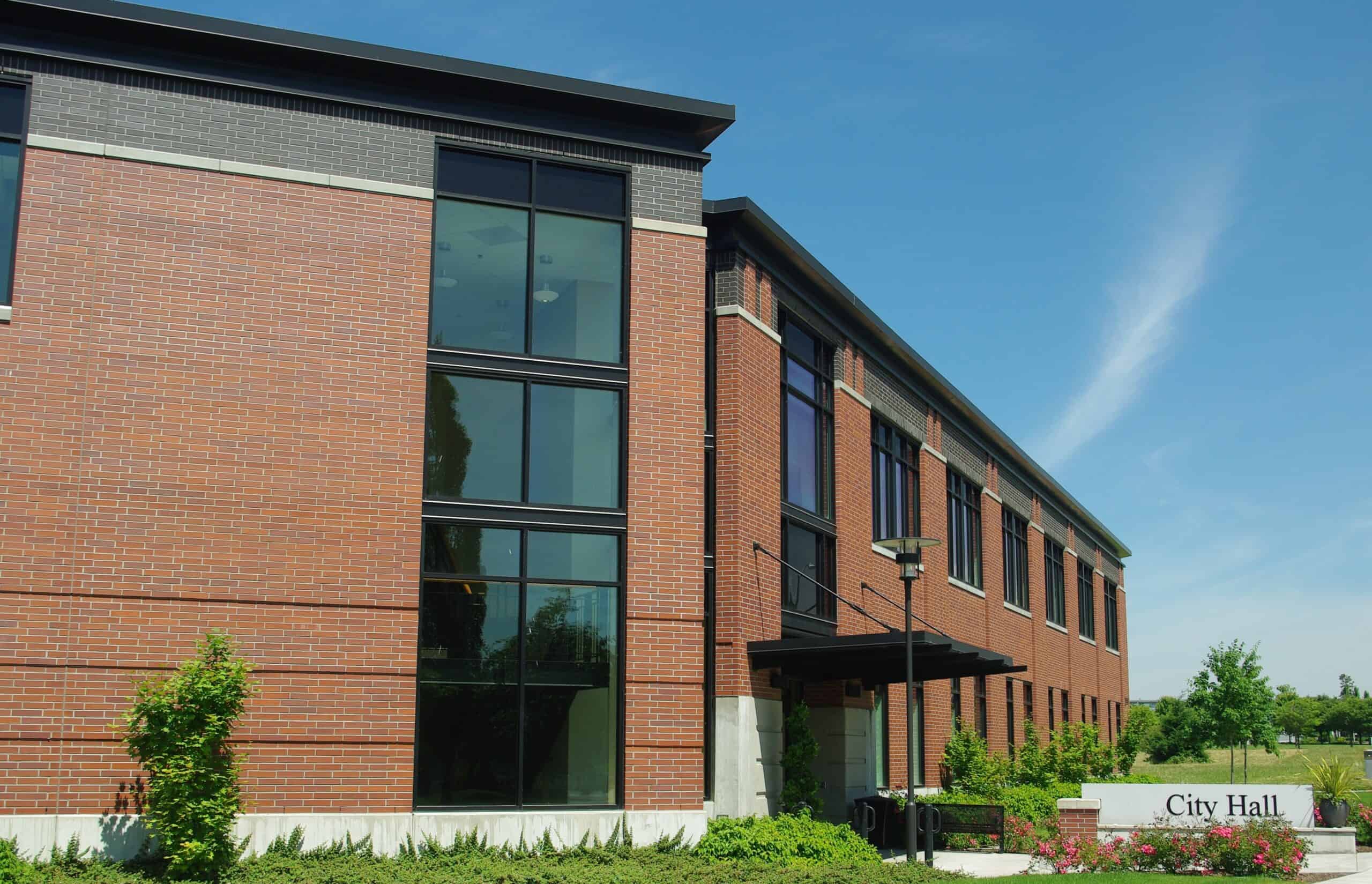
What’s the closest feature near City Hall?
How many primary schools are in Wilsonville?
How many Fire Stations?
How many Police Stations?
Are there any other key locations?
Goal of the Lesson: The goal of the lesson would be for students to become more aware of the city they live in, as well as gain familiarity with using a map. My hope would be for my students to become familiar with where they can go for help such as the police station and fire station, as well as where the main Public Parks, Primary Schools, and Library are located.
The map helps students find these locations by having them pinned and color coded so that students can see where these high-interest locations are. Students may also turn on satellite view in order to see these locations as they appear from above.
Citations:
Image thanks to: By M.O. Stevens – Own work, CC BY 3.0, https://commons.wikimedia.org/w/index.php?curid=7108597
About AI: I think that AI is an interesting Critical thinking/Complex problem solving instrument that requires those using it to really grapple with what they’re trying to get out of the AI in order to produce proper results. With that being said, if you just punch in an equation (unless it’s incredibly simple, or you as the operator are incredibly trusting…) can easily lead someone down the wrong rabbit hole of information. Especially in tools such as ChatGPT which uses the memory it reads from the current instance/conversation, such errors can begin to compile and lead to a deeper pit than they originally started in. All that aside, I do see the value that AI can have in a classroom as it can be used as an idea generator or advanced search for instructions and procedures. In other words, it’s useful in theory but all its responses should definitely be taken with a grain of salt. On a side note, I figure that students may try to use AI to do their work for the which proposes its own set of issues for both student and teacher alike. For instance, the student who writes their assignments with AI will be critically ill-prepared to perform during assessments of most kinds, and may learn significantly less from the experience than a student who wrote the essay themselves and put in all the work behind the traditional process. Next there’s the teachers who will need to be ever vigilant to weed through assignments and gain an “eye for counterfeit” and differentiate work created traditionally and that created by an AI.
AI Created Lesson – ChatGPT
Lesson Title: “Phonics-tastic Adventure: The Long and Short of Vowels”
Objectives:
Students will be able to identify long and short vowel sounds with ease.
Students will be able to apply their knowledge of long and short vowels to spell words with accuracy.
Students will engage in a fun and interactive learning experience.
Materials:
Chart paper and markers
Word cards with long and short vowel sounds (e.g. “hat,” “ate,” “ate”)
Whiteboard and dry-erase markers
Beanbags or soft objects
Secret ingredients: A big smile, a positive attitude, and a sense of humor!
Introduction (5 minutes):
Review the five vowels (A, E, I, O, U) with the class and get them excited!
Ask the students if they know what long and short vowels are and if they have any guesses on what the secret ingredients are.
Write “long vowels” and “short vowels” on the chart paper and ask the students to give examples of each with a corny joke, for example: “Why did the long ‘a’ go on a date with the short ‘e’? Because they both wanted to be together for a-least a little while!”
Direct Instruction (10 minutes):
Write a word on the whiteboard with a long vowel sound (e.g. “cake”).
Ask the students to repeat the word slowly, stretching out the vowel sound (e.g. “caaake”).
Write a word on the whiteboard with a short vowel sound (e.g. “cat”).
Ask the students to repeat the word slowly, noticing the short vowel sound (e.g. “cat”).
Repeat this process for each of the five vowels, adding corny jokes and humor along the way!
Guided Practice (15 minutes):
Hand out word cards to each student.
Instruct the students to sort the word cards into piles based on long or short vowel sounds, “just like sorting your favorite snacks, you want to put the right vowels in the right pile!”
After they have sorted the cards, have them share their findings with a partner, “partner up, it’s always better to learn with a friend!”
Independent Practice (15 minutes):
Divide the class into small groups.
Give each group a set of word cards and a beanbag or soft object.
Instruct the students to take turns reading a word from the card and throwing the beanbag or soft object to a designated spot in the room based on whether the word has a long or short vowel sound, “let’s see who can hit the bullseye of vowel sounds!”
Repeat this activity several times, adding corny jokes and humor to keep the students engaged.
Conclusion (5 minutes):
Review the long and short vowel sounds with the class.
Ask the students to share what they learned during the lesson, “what a phonics-tastic adventure!”
Write a few words on the whiteboard with long and short vowel sounds and ask the students to read them and identify the type of vowel sound, “let’s put our knowledge to the test!”
Assessment: Observe the students during the independent practice activity and their participation in the class discussion. Use their sorting and reading of words during the independent practice to informally assess their understanding of long and short vowel sounds. “
Reflection on AI Use: I used ChatGPT to create this lesson plan, as well as the title of this post using the prompts “Create a simplistic, active, engaging lesson plan for 2nd grade students about the phonics behind long and short vowels including corny jokes and several “secret ingredients” for the lesson plan, and “give me the most witty and funny title for a paper about AI use in the classroom.” I wanted to test out its differentiation to lesson plans when you splash a little bit of color into the descriptions of what you want and though it wasn’t as joke-filled as I had hoped, I think that it turned out really nice. The title came out the first time pretty good though.
I used Lexica.art/aperture to create the cover image by inputting “Junji Ito Mnt. Fuji” with varying results, but I enjoy the aesthetic of this one specifically despite its massive size. I was expecting something a little more black and white but this was a nice outcome of it mis-representing the prompt
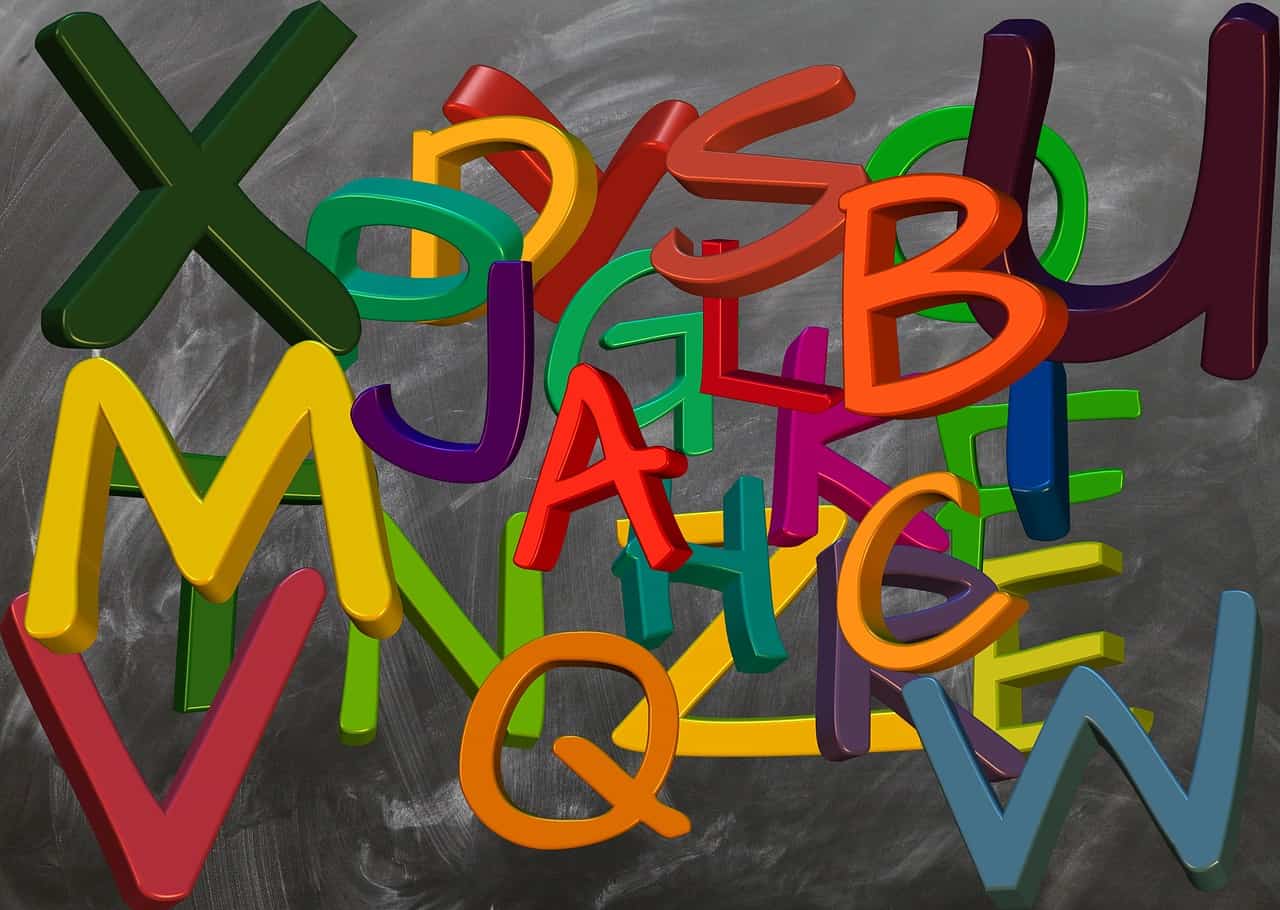
Vowels are pretty special and can make so many different sounds! But something else that makes them special is the amount of ways that you can spell the same sound using only one vowel. One of these is the “long a” . The sound a “long a” makes is its name! But there are so many ways that this sound can be made with your spelling! Let’s learn some of these different ways and play a game while we’re at it.
Beyond “a” there are actually a lot of different ways to make the “long a” sound. Can you figure out one way by looking at this group of images? What gives them their “long a”?
What makes all these objects similar in their spelling?
If you guessed that they all have an -ay at the end, you would be right! -ay is a special way of making the “long a” sound. The rule for -ay, is that it always is found at the end of a word! So remember, if you hear a “long a” at the end of a word, this may be how to spell it out!
Next, we have a different way to make “long a”, what’s the same about these picture’s and their spelling?
If you guessed that what they have in common is the “magic e” then you’ve almost got it! We call this method of making the “long a” sound “a consonant e” to show us that there will always be a letter between to give us that “long a” sound! On to the next way!
What makes these two objects similar? Certainly not their appearance! But how are they spelled?
If you guessed that both are spelled with an “ai” then you’d be right! “ai” is our last primary way of spelling “long a” and usually comes in the middle of a word! If you’re on the lookout for it, and start to hear that “long a” in the middle of a word, it just may be this one!
This is a condensed explanation of my journey from almost dropping out of high school to being a few months away from earning my Bachelors degree. Also, have a chill RHCP song.
Hello all, my name is Chandler M. and I’ve been in school for the last 20 years of my life. Having earned an associates and now on my final year of work towards my bachelors degree in education, with hopes to join the PACE program immediately after graduation, I have honed my life in most ways towards the benefit of my school work through years of struggle and determination. Though I have learned to succeed at UP, it wasn’t until years of mistakes under my belt before I began to take my schooling seriously. At first, I didn’t much care for school and truly sat through it as that was what was expected of me. My IEP kept me barely above water, and I severely struggled with turning in my work, and don’t even get me started on the amount of work I would do, and then never turn in. This became a downward spiral for me when I was in middle school and continued throughout high school until the very end of my sophomore year. At this point, I felt that “I would just go to a state school with my friends, right?” Needless to say, my GPA at the time wouldn’t have allowed for this. This was the year that I was told that I wouldn’t be allowed to go to any college or university because of my grades unless I stepped back and took a serious change towards my education by my school counselor. This was world-shattering to my high school self. I knew that I wasn’t giving my all towards school, but no one had vocalized the amount of damage I was doing to my future prospects until this point. That’s when I decided that I would give school my absolute highest effort if not for my instant benefit, the benefit of my future. I began to push myself academically and give my 110% towards school in all aspects. I would arrive early, I would leave late from asking questions, and if I wasn’t clear on something I would stay upwards of 2 hours after school ended asking different teachers for guidance if they would have me. My grades began to reflect these changes in behavior, and my name started showing up in the quarterly honor roll list in the hall, then I aced my language class and was allowed the opportunity to go to Japan with a few of my classmates including two of my closest friends today.
Trying to find an interesting video on where I had my week-long homestay, I ran into this one which shows several of the locations and people I met myself on my trip there in high school.
The experience of traveling to another country for the first time was life-changing to say the least. I met amazing people, ate great food, and made a lot of memories. But one of the most important things that happened on that trip was meeting a member of the JET program, which is for education majors from other countries to come to Japan to teach for a stretch of time in a professional setting. At the time I was entirely mesmerized by this concept. Going to another country and living there? Teaching others English? It seemed so interesting to me, I was awestruck by its mere existence, and I wanted desperately to join it. This was my initial push towards bringing my grades up, and this allowed me to bring my GPA up high enough to seriously consider college.
At first I thought about going to OSU with my classmates, but I was unsure in myself if I could truly keep up my forward momentum academically. After all, it was only my second year of being able to pass all of my classes instead of only 2-3/6. With this in mind I looked towards community college and settled on attending at Portland Community College, the “Largest Community College in Oregon”.
Community college was a whole other beast compared to high school, and I knew this heading in. At the beginning of my attendance here I wasn’t used to acting on my own, and time management wasn’t something that I had a complete grasp on thus far. However, over my 3 year attendance here, I learned a lot about several concepts and topics that I had interest in, and met many wonderful and extremely supportive professors, including the professor of my only education courses, who I had for 3 terms in a row. I learned a lot about education here, and a few life lessons as well. One such life lesson is knowing how to manage my time. When I came in, I was working full time, and going to school full time. I would stay up until 4 am most days and manage to wake up just in time for my 10am classes. I was truly burning the candle at both ends, to nobody’s benefit. I was coming in late to class, I was calling out of work because I couldn’t stay awake long enough to drive.
It was at this point that I was forced to work less with my introduction to having to travel to 2 campuses for class on the same day, with a 30 minute drive on a good day in between. The Rock Creek and Sylvania campuses are both beautiful and yet completely different from one another in the needs they require to attend.
Sylvania is the main campus and has an extensive amount of parking, and everything is very close together, a wonderful use of space, although be it slightly confusing to get around. Rock creek however, which was over 35 minutes from Sylvania, thus bringing my commute every day up to over an hour from home, is very spaced out, and has large stretches of lawn between the different buildings that classes are held. This was not something that I was used to, and had to change how I thought about time in order to arrive to places on time, and prepared for class to start before the class started.
Time was truly not on my side.
This commute, and struggle with timing forced my hand. I had to cut something out, but what? How was I going to be able to afford driving to school, taking my courses, completing assignments, and work all in the same day? The answer? I didn’t. At this point, I stopped driving to both campuses, I began to use the shuttle system that ran like clockwork between Sylvania and Rock Creek, I learned the absolute limit as to how long I could spend my time studying and reading and still be able to just make it to the bus stop in time. I learned when the the gates to the campus opened so I could spend more time before class completing assignments and finishing assigned readings, and I learned when the last bus ran back to Sylvania to spend the most of my time completing my course work. I became methodical, working like a machine to keep myself afloat.
At this point, I had only one goal in mind, get my degree, and move on. I couldn’t think of anything else more important to me than simply pursuing education even further. I had some set backs, I thought I wouldn’t be able to handle it at some points, or that I might break. But I continued onward with the hope of someday becoming a teacher. Throughout this time, I managed to spend at least some amount of time out of every school year helping out in one of the local schools to my area. Sometimes I would simply observe, sometimes I would interview them for an assignment, and sometimes I simply helped print out papers and cut out materials. But through these experiences I learned lessons in classroom management, resource management, had ideas for future lessons, and figured out the grade range I would feel most comfortable teaching.
On my 4th year out of high school I began to go to UP. This was a big deal for my family, as the last 3 generations on either side never went through college. Since then, I have continued to give everything I have in school. I start assignments the day I receive them when possible, and ask (sometimes too many) questions. Though sometimes it seems like everything is getting a little shaky, I have a wonderful group of friends and family who are there to support me. As well as excellent colleagues who push me to achieve greater goals.
With that being said, I’m nearing the end of my 20 year educational journey, and am excited to see what the future has in store for me. I have come a long way, and owe it all to a lot of different people. I hope to graduate this spring, and I know if I keep track of my time, keep a level head, and finish my assignments early, I will be well on my way to turn my educational career, into a teaching career.