Reduce, Reuse, Recycle!

I would want to present this lesson either to a second or third grade class. The overall lesson would be to teach students what goes in the recycling and garbage bins and then eventually add on into the lesson later how certain items can be composted. This Jamboard would be used after teaching them about what is recyclable and what is supposed to go in the garbage. The activity would allow them to test their knowledge on information I just gave them as well as let me see what I need to go over again to make sure everyone understands

Instructions for Jamboard Activity

  1. After having a lesson on what can be recycled and what is garbage I will split the class into 4 groups
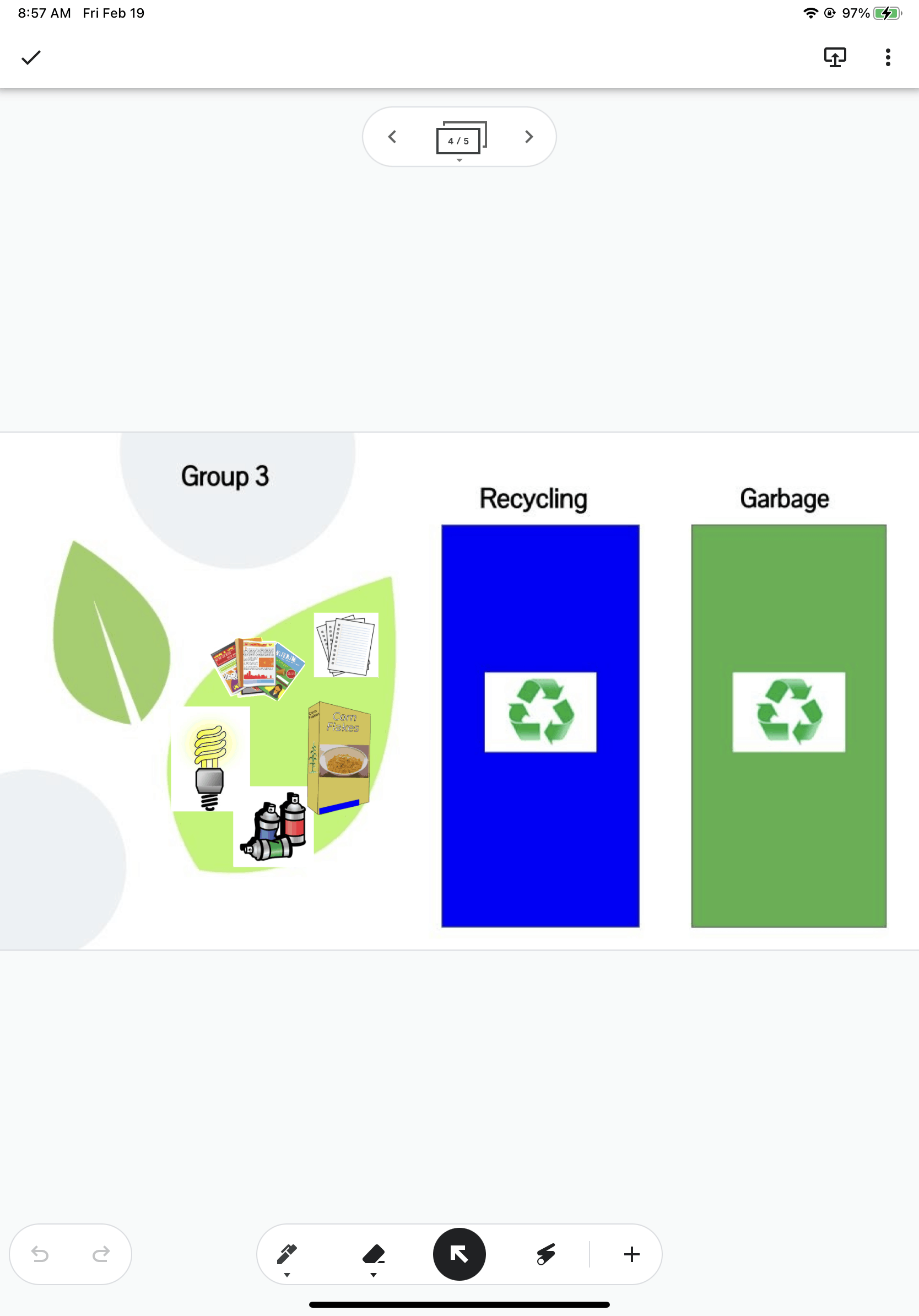
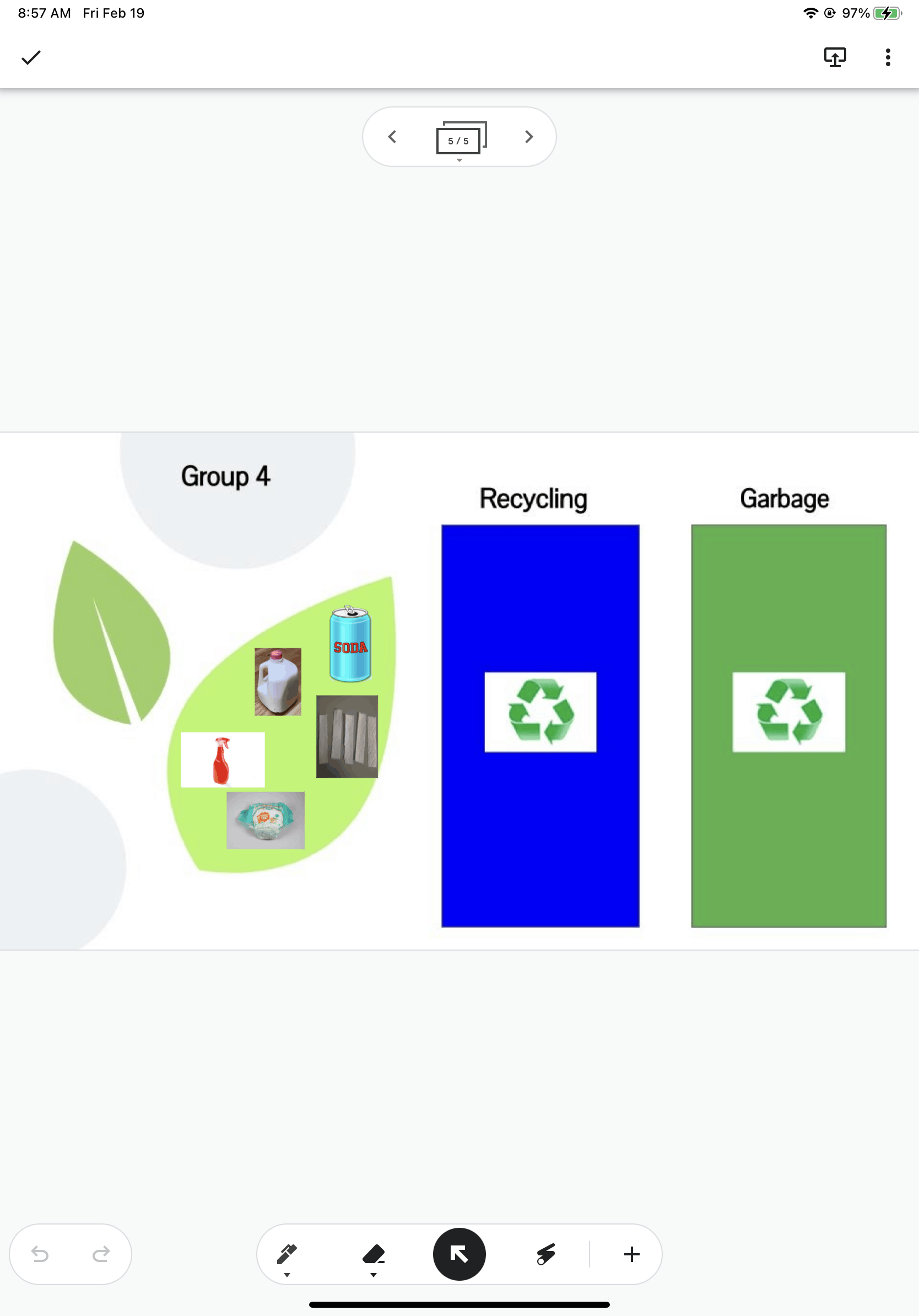
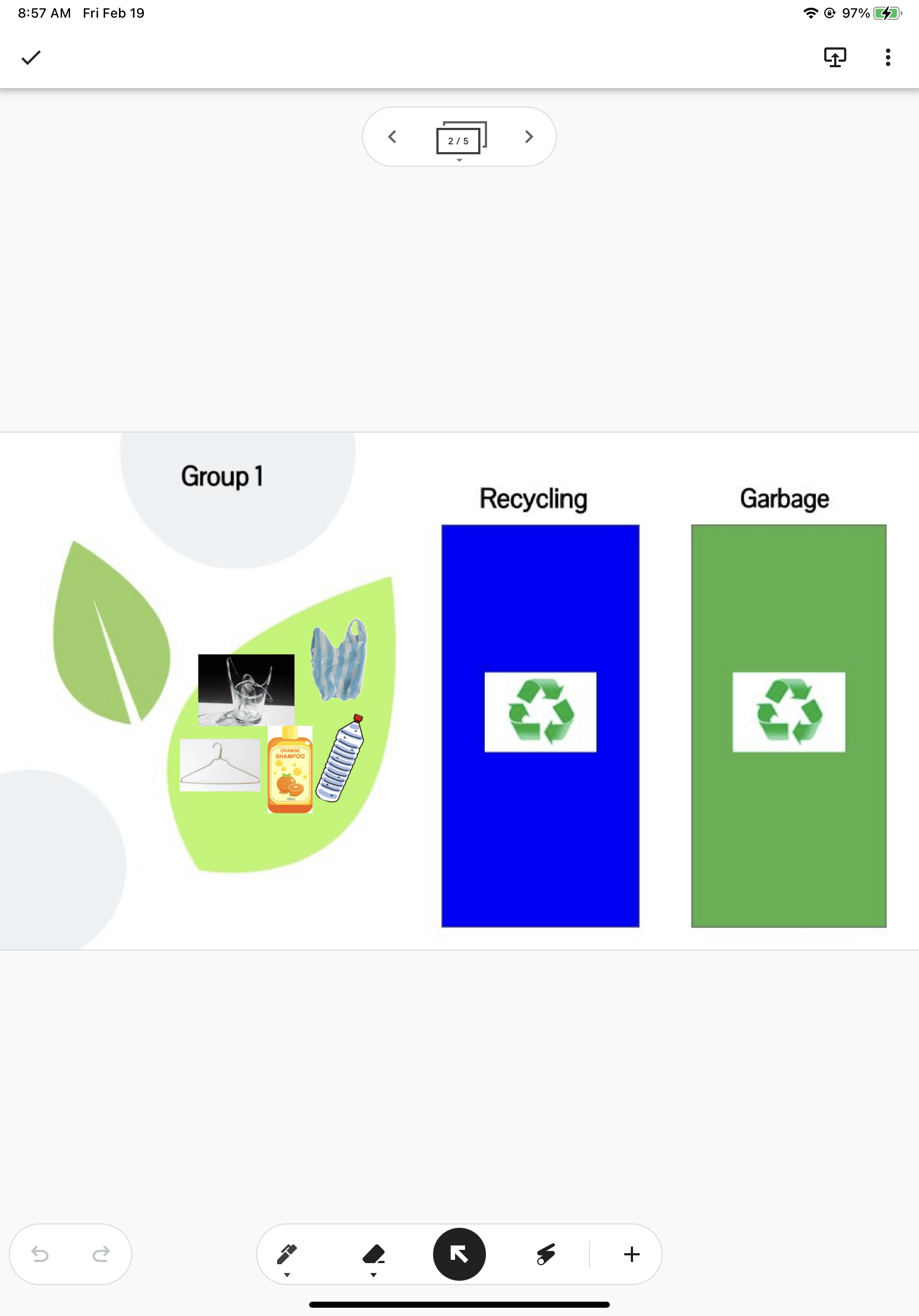
  2. Each group will have their own slide with 2 column saying garbage and recycling, there will also be a leaf where different items are seen
  3. Each group is to move each item to the column they think the item should be in (garbage or recycle?)
  4. I would give the students about 5 minutes with their group to do this activity and then as a class we would go through each groups slide to make sure they understand the lesson.

https://jamboard.google.com/d/1WDpRpRKjvH1wD-_LzIbY2xrVNXp3E3gglw3l4zsJVsU/copy

I hope to use this lesson in my own classroom in the future as well as Use Jamboard because I think its a great tool to use in the classroom whether its virtual or in person!

Featured Image: Photo by Paweł Czerwiński on Unsplash

La Nourriture : French Food Visual Dictionary

This is a lesson I will be doing with my seventh graders on Monday as the introduction to our unit on La Nourriture (food). I created a Jamboard with eight slides, containing eight categories of food: fruits, vegetables, meats, dairy, grains, desserts, meals, and drinks. Each slide has 8-10 vocabulary words in that category and students will be put into partners to work on one of the slides. They will look up the new words and recall prior knowledge/cognates to find images that represent each vocab word. This will create a visual dictionary for all of the students to access, rather than simply using a direct English-to-French translation format. When the partners are done, they will present their words to the class and teach each other the new terms (with me scaffolding pronunciation, answering questions, and adding cultural context).

The Periodic Table and the Atoms of the Universe

Featured image credit: “The Periodic Table, #58 on Explore 11/14/07” by larry wfu is licensed under CC BY-NC-ND 2.0

This is a very brief review intended for students who have been introduced to the basics of chemistry, especially in regards to the periodic table (probably for 6th grade and up). Students will:

  • Review what they already know about the periodic table
  • Reflect on information/concepts with which they struggle
  • Identify major families on the periodic table
  • Identify information represented by the periodic table
  • Recall information relating to atoms and subatomic particles
  • Use recalled information to identify parts of an atom
  • Practice collaboration skills by researching an element in groups (which will have to be assigned by an instructor)
  • Reflect on the value of the assignment itself

To view the Jamboard: Click HERE

The instructor will need to assign groups and (may need to) set or change time limits for each activity. Directions for each activity are included on each slide of the Jamboard.

This lesson allows students to actively engage with previously learned material and permits better and deeper understanding of the material learned through a variety of activities that appeal to the visual sense while learning and working with their peers.

Happy periodic learning!