

The Ahupua’a System of Ancient Hawaii

Hello 4th graders! In today’s Hawaiian history class, we will be learning about the ahupua’a system. To prepare for today’s lesson, make sure you have a blank piece of paper and coloring supplies!

What is an ahupua’a?

In ancient Hawaii, the land was divided into sections that were ruled by local chiefs. These sections were shaped into thin slices that started high in the mountains and extended to the sea. These sections were called an ahupua‘a. Within each ahupua’a, there are three geographical areas: uka, kula, and kai. Watch this quick video below to learn more about the ahupua’a system!

Today we will be drawing an ahupua’a system. To start off, get your blank piece of paper and set it down in front of you in portrait style. Then divide the space on your paper into three equal sections by drawing two horizontal lines across your paper. We will start at the topmost section with uka!

Let’s draw an ahupua’a system!

Uka

As the video mentioned, the uka section of an ahupua’a was in the upland areas along the mountains. There were many important resources that uka provided:

  • Koa wood to build canoes, houses, and artistic crafts
  • Kauila hardwood to create weapons and tools
  • Stalks that were flexible enough to use for fishing net rims and for musical bows
  • Roots, vines and other plants for fishing tools, leis, and medicinal purposes

On the section at the top of your paper, start drawing the uka of your ahupua’a system. Feel free to draw some koa trees, maile vines, mamaki, and other plants you may find high in the mountains! There are also many colorful birds in this area you can draw such as the ‘Apapane, ‘I’iwi, and ‘Amakihi. And don’t forget to label “Uka” somewhere in this section so you don’t forget its name!

Kula

Kula is the next section of the ahupua’a, settled between the mountains (uka) and the sea (kai). And so you will be drawing kula in the middle section of your paper. Unlike uka, kula has flat, sloping land that was mostly used for agriculture. Some common plants that were grown here include:

  • Bananas
  • Dry-land kalo (used to make poi, which was a very important food for early Hawaiians)
  • Sweet potato
  • ‘Ulu (breadfruit)
  • Kukui trees
  • Pili grass (used for building houses)
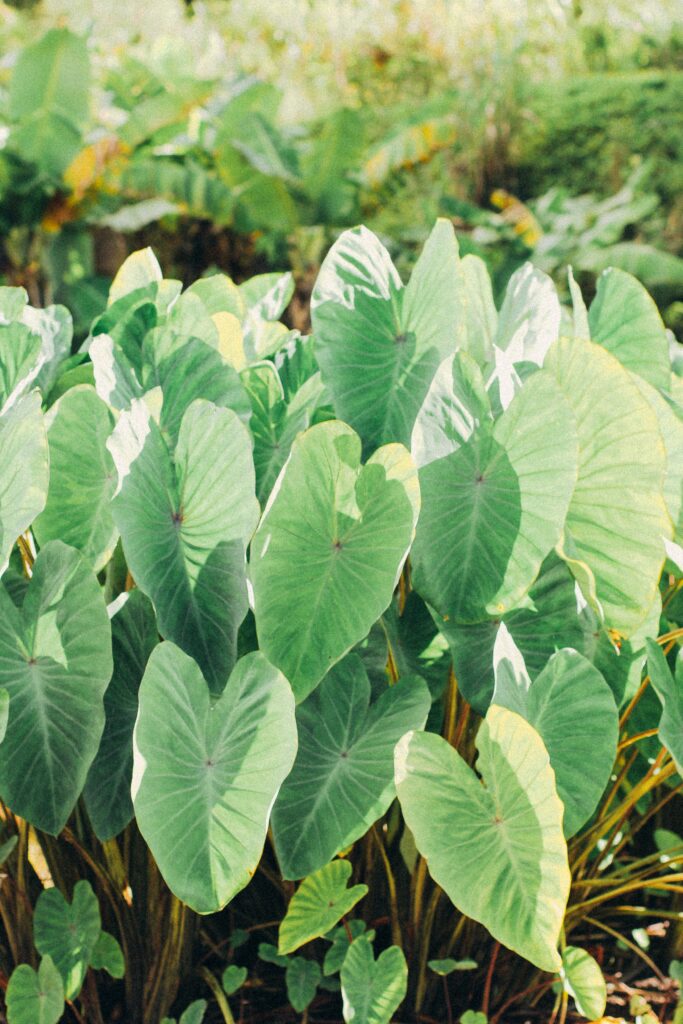
Use the images above as inspiration as you draw the kula of your ahupua’a in the middle section of your paper. Make sure to label this part as “Kula” and try to draw at least three different plants in this area (but feel free to draw more!).

Kai

The final part of our ahupua’a is kai, which includes the sea and land near it. Kai is an important section because it supplies the ahupua’a with fish, salt, and other seafood. There were also many medicines that come from this area, such as seawater itself. Hawaiian salt (also known as pa’akai) was particularly essential because it was used for many things: medicine, preserving food, ceremonies, and seasoning. Some other resources that came from kai include:

  • Coconut trees used to create brooms, canoes, spears and fans
  • Seashells that were made into as small bowls and knee drums
  • Noni which is a fruit used for medicine and yellow dyes
  • Algae, seaweed and limu that were used as food (limu is a sea plant that has lots of nutrients and vitamins)
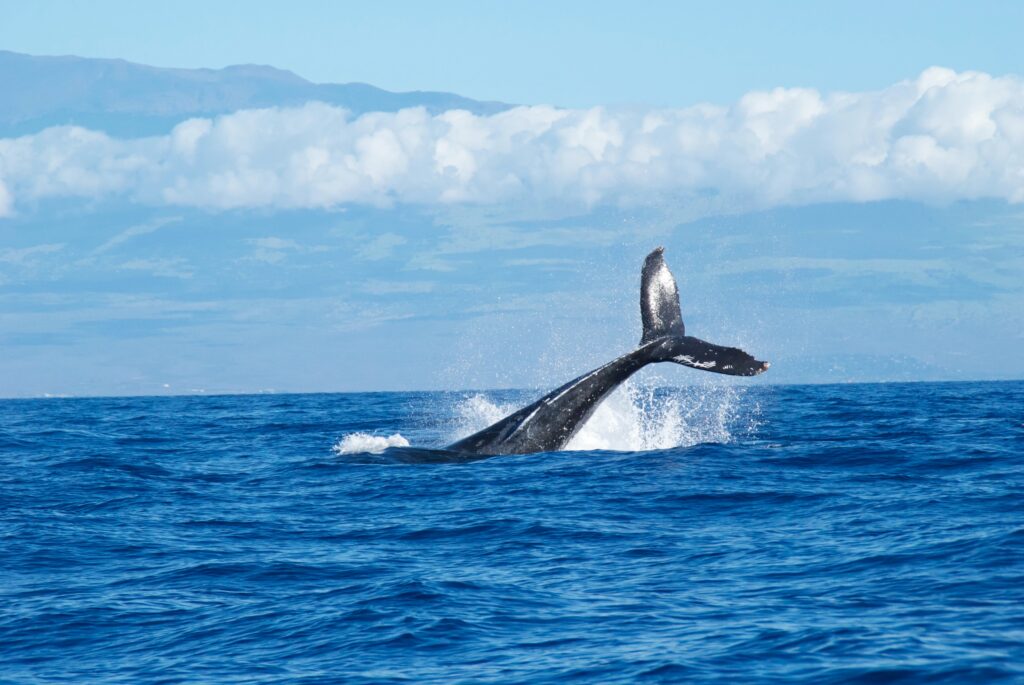
To finish our ahupua’a drawing, draw your kai area at the bottom section of your paper. You can include all sorts of ocean critters here, such as the whales, fishes, and turtles in the images above. And to finish it off, label this section “Kai.”

Review

An ahupua’a was an important system in ancient Hawaii. Typically, an ahupua’a was a narrow strip of land that extended high up from the mountains, uka, to the sloped plains of kula, and finally to the ocean, kai. Each of these three areas had important resources that were traded and used for food, tools/weapons, medicine, shelters, musical instruments, and crafting/decorations. The most important thing for a successful ahupua’a was that everyone did their part. The people living here had essential jobs and responsibilities. These responsibilities were called ‘kuleana.’ When everyone did their kuleana, the land and its people could thrive. Try to brainstorm about what your kuleana may be. Some examples include taking care of siblings, doing house chores, being kind to others, and even simply staying healthy. Write down your possible kuleanas on the back of your ahupua’a drawing and be ready to share some of them with the class.

Image credit:

Photo by Pietro De Grandi on Unsplash Photo by Kevin Doran on Unsplash
Photo by David Lang on Unsplash
Photo by Studio Kealaula on Unsplash
Photo by Fallon Michael on Unsplash
Photo by Martin Zangerl on Unsplash
Photo by Sean Robertson on Unsplash
Photo by Jason Miller on Unsplash
Photo by Tristan Ramberg on UnsplashPhoto by Athena Kavis on Unsplash
Photo by Valkyrie Pierce on Unsplash
Photo by Abigail Lynn on Unsplash
Photo by Karson on Unsplash
Photo by Joe Cook on Unsplash

A Friendly Reminder About the Life of a Student

I have only a few years left of being a student as of now, which is both a scary and liberating thought. I think that many teachers, especially older ones, sometimes forget what it felt like to be a student and lose their ability to empathize with them as a result. In order to prevent this from happening to me in the future, I will use this assignment as an opportunity to document my experiences of being a student throughout the years, starting at the beginning: preschool.

Preschool

When it comes to preschool, all I remember was playing outside all day and nap times. I honestly hardly remember anything from that time, so maybe it doesn’t make sense to have a preschool section in this post. But for the sake of encompassing my entire academic experience, I will persevere.

One of the few things I remember is that I did not take full advantage of nap time as a preschooler, which I regret very much now. For some reason, I didn’t get tired like the other kids and wanted to continue playing during our sleepy times. If I could go back in time, I’d give preschooler Lannie this Spotify playlist that I use almost nightly to fall asleep now.

Elementary School

As an elementary student, I remember being a little bit crazy. Some of my friends who went to elementary school with me still like to bring up how I used to bite them on the playground. I don’t really remember much of actually biting people (thankfully), but I do remember my mom being absolutely pissed when she found out. Not my brightest moment in life.

Yes, I was the weird kid on the playground in the past, but now I consider myself a relatively normal person who no longer bites people. This experience will remind me in the future that even though a child may act really weird in youth, there is still a chance that they will not be as weird when they grow up.

Kumon was a big part of my life in elementary school. For those who were lucky enough to have never heard of it, Kumon is an educational company that focuses on math and reading. It’s basically a cram school. I studied math in Kumon and was completely miserable. I would do everything I could to evade having to complete my work and go to the Kumon classroom. I often got in trouble for it, but all those scoldings did not help with my lack of motivation. Eventually, I convinced my parents to let me quit which was one of the happiest moments of my life. Yet ironically, I went back to Kumon to work there as a high schooler.

I’m in no way trying to slander Kumon. To prove it, I will even provide a video below on how Kumon helps students in case people were interested in having their children enroll.

I actually think Kumon was really helpful, but just not for all students. There was little diversity in the way kids learned; You were just handed packets of problems to complete every week. There are many kids out there that flourish under Kumon’s instruction, but there are also many that do not gain anything from it. For teachers, this concept should be a no-brainer since they see the differences in which kids learn every day.

Middle School

I believe middle school is the most embarrassing time of everyone’s life. And so, I will not be going in-depth here because I just don’t want to think about it too much.

Band is what I remember the most from middle school. I truly recommend sending your children to band as an elective because it keeps children out of trouble, teaches them music, and ensures that they have friends even though those friends might be a bit odd. At least that’s what I experienced. I chose to play percussion because I did taiko (Japanese drumming) outside of school and my sister chose percussion. Unfortunately, that was truly one of the worst choices of my life.

Band was also an opportunity to travel. We went to other islands in Hawaii and to Disneyland! Those trips were definitely highlights of my middle school experiences. One of my close friends and fellow percussionists uploaded his vlogs from the trip, and so I included one of them below. He screams his head off the entire time so don’t wear earphones if you decide to watch it.

High School

High school is when things got much busier. I continued in band, but it was no longer my first priority. I started having to divide my focus between student government, tennis, clubs, standardized tests, AP classes, my Japanese studies, and many other extracurriculars/interests.

Many of my favorite memories come from my Japanese classes. It was through Japanese that I met possibly my favorite teacher ever. She build very strong relationships with her students and assigned us many fun and contextualized projects. Her class was anything but easy. However, I knew that she had high expectations for all her students that she was certain we could meet them. This made me motivated not only in terms of getting good grades but also to make her proud. As a result, I learned a great deal of Japanese from her, enough to pass the Seal of Biliteracy test in my senior year. I’m very grateful to my sensei!

Although I was never that good at it, I did tennis for all 4 years of high school. I really miss the camaraderie that you feel when you’re a student-athlete on a team. However, I do not miss the stress that can result during the season of your sport. There were many moments when I felt mentally, physically, and emotionally drained, especially when there were high-stakes matches and intense practices every day on top of everything else going on. If I ever find myself being a high school teacher, I’ll definitely remember how stressful high school can be for students.

Undergraduate College

Transitioning to college from high school was strange to say the least. My first year of college was completely online, something that I had never experienced before. It wasn’t the most terrible experience for me. I was actually pretty happy to stay at home sometimes, just hanging out with my dog. But I will say, living in Hawaii Standard Time while your classes are in Pacific Standard Time was extremely annoying. Not only did I have to wake up insanely early for classes, but I also had to constantly convert times in my head and adjust my schedule whenever Daylight Savings hit.

Wish I had a pet raccoon that would wake me up when I fell asleep during my 4am classes last year

When my current, second year of college came around, I was finally able to go onto campus and attend in-person courses. It felt completely different from my previous year online. I hadn’t made a single close friend at UP when things were online, and now I have a great friend group with who I will be living in a house next year! These experiences are a reminder of how important the social aspect is in one’s education. I cannot imagine how difficult it must have been for students in grades K-12 who were completely online last year.

Conclusion

The life of a student is certainly filled with ups and downs. It is such a memorable and important time of life that teachers especially cannot forget. A good teacher should be able to draw on their own experiences and empathize with their students. When I become a teacher, I want to try my best to imagine my students’ POV to understand their experiences in my class, and that can only happen if I remember what it was like to be a student in the first place.

Image credit: Photo by Zachary Keimig on Unsplash