
AI and the Amazon Rainforest

I asked Chat GPT to “create a lesson plan teaching first graders about the Amazon Rainforest,” the written plan is also included in this post. This is a great resource to help teachers plan lessons, as it is able to come up with detailed plans that include assessments, talking points, and activities to do during the lesson. This would be super helpful in developing new ideas and strategies. It is important to consider the specific needs of my class and individual students, what the class already knows, students’ interests, etc. before I teach using a lesson plan created by Chat GPT. While it is an excellent tool, it cannot replace teacher planning entirely, and should instead be used as a starting point. For example, if I was going to teach a lesson using the lesson plans here, I would first want to consider adaptations/modifications that I would need to make to ensure the lesson is appropriate for my students. I would also want to consider what lessons will be following this one to ensure that this is consistent with them, and matches the standards and unit goals.

Title: Exploring the Wonders of the Amazon Rainforest

Objective: Students will learn about the Amazon Rainforest, its geography, and some of the animals and plants that live there.

Materials:

  • Pictures of the Amazon Rainforest and its animals
  • A map of South America
  • Construction paper
  • Scissors and glue
  • Crayons and markers
  • Books about the Amazon Rainforest (optional)

Introduction: Begin by asking the students if they know what a rainforest is. Explain that a rainforest is a type of forest that is always wet and humid. Introduce the Amazon Rainforest, and show pictures of the rainforest and some of its animals.

Body:

  1. Geography of the Amazon Rainforest
  • Show a map of South America and point out where the Amazon Rainforest is located.
  • Explain that the Amazon Rainforest is the largest rainforest in the world, and covers many countries including Brazil, Peru, Colombia, and Venezuela.
  • Discuss the climate of the Amazon Rainforest, explaining that it is hot, humid, and rainy.
  1. Animals of the Amazon Rainforest
  • Show pictures of animals that live in the Amazon Rainforest, such as jaguars, monkeys, sloths, and parrots.
  • Talk about each animal and what makes them special. For example, you could explain that jaguars are the largest cats in the Amazon, monkeys can swing from tree to tree, sloths move very slowly, and parrots are colorful birds that can talk.
  1. Plants of the Amazon Rainforest
  • Show pictures of plants that live in the Amazon Rainforest, such as trees, vines, and flowers.
  • Explain that the Amazon Rainforest is home to many types of plants, including the tallest trees in the world.
  • Talk about the importance of plants in the rainforest, including how they provide oxygen, food, and shelter for animals.

Activity: Have the students create a rainforest collage using construction paper, scissors, and glue. Instruct them to cut out pictures of animals and plants from magazines or printouts, and glue them onto a piece of construction paper. They can use crayons and markers to add more details to their collage.

Closure: Ask the students to share their collages with the class, and have them explain which animals and plants they included. Review the main points of the lesson, and encourage the students to share what they learned with their families.

Assessment: Assess the students’ understanding of the Amazon Rainforest by reviewing their collages and listening to their explanations of the animals and plants they included. You could also ask them questions about the geography and climate of the rainforest, or have them draw a picture of their favorite animal or plant from the Amazon Rainforest.
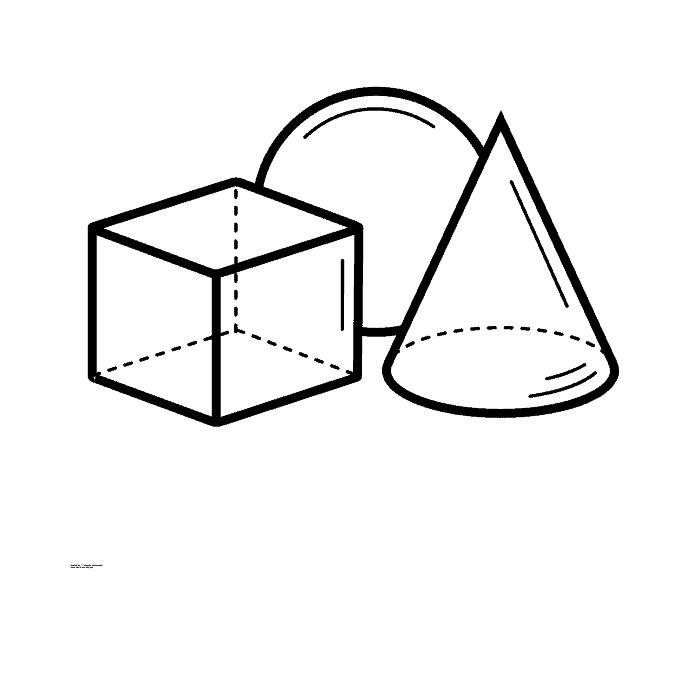
Featured image: Image by Nile from Pixabay

Shape Scavenger Hunt Relay

“Shape Scavenger Hunt Relay” is a ChatGPT created brain boost using the prompt: “Create an activity, incorporating movement and teamwork, for a Kindergarten class. The activity should address the standard: K.G.A.3 Identify shapes as two-dimensional (lying in a plane, “flat”) or three-dimensional (“solid”).”

One engaging activity for a kindergarten class that addresses the standard K.G.A.3 and incorporates movement and teamwork is “Shape Scavenger Hunt Relay.” Here’s how to implement it:

Materials:

  • Flashcards with pictures of 2D and 3D shapes (e.g. square, circle, triangle, cube, sphere, cylinder, etc.)
  • Two baskets or containers labeled “2D Shapes” and “3D Shapes”
  • Two cones or markers to designate start and finish lines

Instructions:

  1. Divide the class into two teams and line them up at the start line.
  2. Place the two baskets or containers with the shape flashcards at the opposite end of the room.
  3. Explain that the teams will take turns sending one player at a time to run to the baskets, grab a shape flashcard, and identify whether it is a 2D or 3D shape.
  4. If the player identifies the shape correctly, they can run back and tag the next player in line to go.
  5. If the player identifies the shape incorrectly, they must return the flashcard to the basket and try again before tagging the next player.
  6. The first team to correctly identify and retrieve all the shape flashcards wins.
  7. After the relay, have the children sit in a circle and discuss the different 2D and 3D shapes they found.

This activity encourages movement, teamwork, and helps students identify and distinguish between 2D and 3D shapes. It also provides an opportunity for the children to practice communication and problem-solving skills as they work together to complete the relay.

Written by ChatGPT

Using AI in the classroom can greatly benefit teachers, as it offers another form of support in writing lesson plans and developing activities for students. It seems like a great way to help relieve some of the stress of being a teacher as it offers creative and helpful prompts that can be completely copied or simply used as a starting point. I can foresee myself using this in the future, especially to brainstorm ideas.

Something I struggled with, however, was writing a detailed prompt that would guide ChatGPT in writing an activity that fit what I was looking for. However, if I already have lesson plans written out and continue to practice using this software, thinking of prompts will become easier over time. Another thing to keep in mind when using AI-generated texts/ideas is that it does not have the experience working with students as you do as their teacher, so you will need to consider students’ accommodations, interests, and other important factors when editing and implementing any lesson plans or activities written by AI. But overall, I think it is a helpful, time-saving tool that I hope to become more comfortable using.

Featured image created by Oleksandr Panasovskyi from Noun Project.

Voluminous Potential

AI is an intriguing tool for teachers to explore. While AI cannot understand your students’ interests or make emotional connections, teachers can use AI for lesson or assessment inspiration and then change it to best fit their class.

I asked ChatGPT to create an activity to teach 5th graders volume and this is what it came up with:

Objectives:

  1. To understand the concept of volume
  2. To understand how to measure volume
  3. To practice measuring volume using cubes

Materials

  • Small cubes (such as cube blocks or dice)
  • A clear container (such as a glass or plastic box)
  • A ruler or measuring tape

Instructions:

  1. Introduction: Introduce the concept of volume and explain that it is the amount of space that an object takes up.
  2. Measuring Volume: Show the students how to measure the volume of the container using a ruler or measuring tape. Have them write down the measurements for length, width, and height.
  3. Filling the Container: Have the students fill the container with small cubes, one at a time.
  4. Counting the Cubes: Have the students count the number of cubes they used to fill the container. This number is the volume of the container.
  5. Practice: Repeat the activity with different containers of different sizes, and have the students compare the results.
  6. Calculating Volume: Introduce the formula for finding the volume of a rectangular prism: V = l x w x h, where V is the volume, l is the length, w is the width, and h is the height. Have the students use this formula to calculate the volume of the containers they filled with cubes.
  7. Reflection: After completing the activity, have the students reflect on what they learned about volume and how they can use it in real life.
  8. Conclusion: Summarize the main concepts covered during the activity and reinforce the importance of understanding volume.

Assessment: Observe the students as they complete the activity and ask questions to ensure they understand the concepts. You can also ask them to write a brief summary of what they learned about volume.

While I wouldn’t consider this the most interesting activity ever created, this is a good example of something teachers can use as a starting point to build on and make their own. For example, if this was my class, we might start off with an estimation exploration in which students look at an image of a box of candy and try to guess how much candy is/can fit in it. Or we could change the assessment to a partner poster or gallery walk of work about the most important parts of measuring volume/what they learned.

Citations: chat.openai.com, lexica.art/aperture

A.I.: Friend or Foe?

The word A.I. has been thrown around here and there for me but I never decided to look into it till this class where I was encouraged to. When I heard the word A.I. all I could think of was Siri, Alexa, the movie HER, and things of that nature. After playing around with it I’ve decided that A.I. might be an excellent tool for me both now and in the future. I can see how this will be about to help me in my teaching profession when I am stuck on how to make something more palatable for my students such as teaching through song or how intertwining a lesson with an SEL objective or even when I am simply burnt out and just need to one more lesson to get through my week.

I was very broad when I typed in “create a lesson plan for 4th graders about science”.

Lesson Title: "The Science of Sound”

Grade Level: 4th

Duration: 45-60 minutes

Objectives:

  • Explain what sound is and how it travels.
  • Understand the properties of sound such as frequency and volume.
  • Investigate how sound can be changed by objects and materials.

Materials:

  • Chalkboard or whiteboard
  • Chalk or markers
  • Bell or other noisemaker
  • Variety of materials (e.g. cloth, foam, paper, plastic)
  • Blank paper
  • Pencils

Introduction (5 minutes):

  • Ask the students if they have ever heard a sound they couldn’t locate, such as a person talking in another room.
  • Lead a brief discussion on what sound is and how it travels.

Lecture (10 minutes):

  • Using the chalkboard or whiteboard, explain the properties of sound, including frequency (pitch) and volume (loudness).
  • Demonstrate the concept of frequency by ringing the bell or making another noise at different pitches.
  • Explain how volume can be affected by the distance from the source and the type of material it travels through.

Investigation (20 minutes):

  • Have students work in small groups to explore how different materials affect sound.
  • Provide each group with a variety of materials (e.g. cloth, foam, paper, plastic) and a bell or other noisemaker.
  • Have each group test the materials by ringing the bell or making noise and observing how the sound is changed by the materials.
  • Encourage students to make observations and record their results on blank paper using pencils.

Discussion (10 minutes):

  • Bring the class back together and have each group share their results.
  • Discuss as a class how the results are consistent or inconsistent with what they learned during the lecture portion of the lesson.
  • Emphasize the importance of scientific experimentation and observation in understanding how the world works.

Conclusion (5 minutes):

  • Summarize the main points of the lesson.
  • Emphasize the properties of sound and how it can be affected by different materials.
  • Ask the students to think about how they might use what they learned in their daily lives.

Assessment: Observe the students during the investigation portion of the lesson and their participation during the discussion to assess their understanding of the concepts covered. Additionally, review their written observations to assess their ability to record and analyze data.

I then asked “now make a activity and rubric for this lesson plan”. And this is what it gave me.

Activity: “Sound Absorption Experiment”

Materials:

  • Bell or other noisemaker
  • Variety of materials (e.g. cloth, foam, paper, plastic)
  • Blank paper
  • Pencils

Instructions:

  • Work in groups of 2-3.
  • Choose one material from the provided materials.
  • Place the material in front of the noisemaker.
  • Ring the bell or make noise and observe how the sound is changed by the material.
  • Record your observations on the blank paper using pencils.
  • Repeat the experiment with each of the materials.
  • Be prepared to share your results with the class.

Rubric:

CriteriaExcellent (4)Good (3)Satisfactory (2)Needs Improvement (1)
ParticipationActively participated in group and class discussionsParticipated in group and class discussionsLimited participation in group and class discussionsDid not participate in group and class discussions
ObservationsAccurately recorded detailed observationsRecorded observations with some inaccuraciesRecorded limited observationsDid not record observations
AnalysisDemonstrated understanding of how different materials affect soundDemonstrated basic understanding of how different materials affect soundLimited understanding of how different materials affect soundDid not demonstrate understanding of how different materials affect sound
PresentationClear and organized presentation of results to the classPresentation of results to the class with some organizationLimited presentation of results to the classDid not present results to the class

Note: The rubric can be adjusted to fit the specific needs and expectations of the teacher and class.

Overall what it gave me was a basic but put together lesson plan. It has solid bones and I can always flesh it out more and build it to more of my style of teaching. As a person that takes forever to start something but once I do I am on a roll it will really come in handy because with A.I. I can start it no problem so it will make things for my life a lot more easier.

Measuring AI-Designed Activities

AI is an interesting tool to use for teaching. While it’s not a perfect tool, it gives good starting ideas for teachers to use when creating tests or activities. I asked ChatGPT to create an area and perimeter activity for 4th graders and this is what it gave me:

“Title: Measuring our Classroom

Objective: To practice finding the area and perimeter of rectangular shapes

Materials:

  • Ruler or measuring tape
  • Graph paper
  • Pencil
  • Calculator (optional)

Instructions:

  1. Divide the class into pairs.
  2. Give each pair a ruler or measuring tape and have them measure the length and width of different objects in the classroom (e.g. desks, whiteboards, windows, doors).
  3. Have the students record their measurements on the graph paper, using squares to represent square units.
  4. Once they have drawn the rectangle to scale, they should find the area of each rectangle by counting the number of squares inside.
  5. Next, they should find the perimeter of each rectangle by adding up the lengths of all four sides.
  6. Have each pair share their findings with the class, and write the answers on the board.
  7. Finally, challenge the class to find the combined area and perimeter of multiple objects in the room.

Note: Be sure to emphasize that area is measured in square units and perimeter is measured in linear units.

This activity is a fun and hands-on way for 4th graders to learn about area and perimeter. By measuring objects in their own classroom, they will have a concrete understanding of these mathematical concepts.“

While this activity is similar to what I did with my own 4th graders, some things that the AI fails to take into account is how hard it would be for students to draw our what they measure to scale. I definitely agree that students should draw out rectangles to find perimeter and area, but drawing it to scale is too time-consuming and would take away from the main point of practicing finding perimeter and area.

Citations:

Photo by Monica Sedra on Unsplash

Teaching with AI

AI is an interesting topic to talk about. There are so many uses for this technology in the world and teaching is no exception. Currently, my 4th grade students are learning about long division and using the box method and I wanted to see what an AI could come up with for a lesson as I have already done multiple lessons on this topic, so here it is:

I asked Chat GDT to create a long division lesson using the box methods

The box method is a visual way to perform long division, which helps to break down the problem into manageable parts and to avoid mistakes. Here’s a step-by-step guide to using the box method to solve a long division problem:

  1. Write the dividend (the number being divided) inside a large rectangle, with the divisor (the number being divided by) written outside of the rectangle to the left.
  2. Divide the first digit of the dividend by the divisor, and write the result in the top-left corner of the first small rectangle.
  3. Multiply the divisor by the result from step 2, and write the product in the top row of the small rectangle.
  4. Subtract the product from the first two digits of the dividend, and write the difference in the middle row of the small rectangle. If the difference is negative, write a negative sign in front of the difference.
  5. Repeat steps 2-4 for each small rectangle, until you have reached the end of the dividend.
  6. If there is a remainder, write it outside the large rectangle to the right of the last small rectangle, and indicate that the answer is a mixed number.
  7. Repeat the steps until you have reached the end of the problem or until you have simplified the answer as much as possible.

Here is an example of using the box method to solve the problem of dividing 83 by 5:

The answer is 16 with a remainder of 3, so the final answer is 16 R 3.

What this means

This was really cool to see and somewhat scary. This lesson or instructions is pretty close to what I did with my students. While I definitely gave my students more guidance, gave them more examples, and tied it into their personal lives; this lesson that the AI gave was a strong foundation for what is taught in schools.

I do not think that AI is going to take over the teaching job, this can definitely be a resource for teachers that are having a hard time coming up with lessons for the class.

4th Grade: U.S. State Capitals

AI can be a helpful tool when it comes to creating and thinking of lessons, units, and activities for these lessons. However, it is not always the most reliable and can usually need adjustments. I asked ChatGPT to create a creative lesson for 4th graders learning state capitals. I personally didn’t find it to be the most creative or engaging. I would personally find it easier to: have students learn East Coast to West or vice versa and write inside that state on a paper U.S. map. It’s much easier to learn it in physiological order or alphabetically, do it in chunks of 5, and build their knowledge of the state name, capital, and abbreviation over time. I do like the beginning part of students learning capital vs capitol.

Objective: Students will be able to identify and recall the capital of at least 10 states in the United States.

Materials: Whiteboard or blackboard, markers or chalk, a handout with the list of states and their capitals

Introduction (5 minutes):

  1. Ask the students if they know what a capital is.
  2. Explain that a capital is the city where a state’s government is located.
  3. Write the word “capitol” on the board and tell the students that it is a building where a state’s government works.

Direct Instruction (15 minutes):

  1. Pass out the handout with the list of states and their capitals.
  2. Go through the first five states and their capitals on the list and ask the students to repeat after you.
  3. Write each state and capital on the board for the students to see.
  4. Have the students practice saying the state and capital out loud.
  5. Repeat the process for the next five states and their capitals.

Guided Practice (10 minutes):

  1. Divide the students into pairs.
  2. Have each pair take turns saying a state and its capital from the list.
  3. Encourage the students to help each other if they forget.

Independent Practice (10 minutes):

  1. Give each student a blank sheet of paper.
  2. Ask the students to write the name of 10 states on their paper.
  3. Tell them to fill in the capitals next to each state.
  4. Collect the papers and check for accuracy.

Conclusion (5 minutes):

  1. Ask the students if they feel more confident about remembering state capitals.
  2. Review any mistakes that were made on the independent practice sheets.
  3. Ask the students to share one state and its capital that they found interesting or surprising.
  4. End the lesson by telling the students that learning state capitals is an important part of understanding geography and history.

Assessment: Observing the students during independent practice and checking their papers for accuracy will give you an idea of their understanding of state capitals. You can also assess their understanding by asking them to randomly call out a state and its capital.

Photo credit: Lexica Aperture with the prompt “Students in a classroom learning united states state capitals.”

Revolutionizing Lesson Planning with ChatGPT: The Future of Education

The high school I am student teaching at is currently in the midst of our Black Lives Matter Week of Action. When I was lesson planning for this week, I was having a hard time finding a way to connect geometry and the week of action together in a meaningful way. In geometry, we are specifically learning about solid geometry. In order to get some inspiration, I turned to ChatGPT. I typed in: “Make me a high school geometry lesson for the BLM week of action that ties in solids. ChatGPT responded back:

Here is a lesson plan that combines solid geometry and the Black Lives Matter movement:

Objective: To understand solids of rotation and slicing solids and to connect them to issues of social justice.

Materials: Whiteboard, markers, manipulatives (such as clay, Play-Doh, or paper), ruler

Introduction (5 min):

  • Begin by reviewing the basic properties of solids of revolution, such as cylinder, cone, and sphere.
  • Ask students to think about real-world examples of each solid shape, such as a can of soda, a traffic cone, and a basketball.

Connecting solids of rotation to Black Lives Matter (5 min):

  • Transition to the topic of Black Lives Matter and why it is important to learn about it.
  • Explain how inequalities in society can be visualized as slicing solids, where certain sections are larger or smaller than others, representing unequal access to resources and opportunities.
  • Show examples of how systemic racism creates disparities in areas such as education, employment, and healthcare.

Hands-on activity (25 min):

  • Divide the class into small groups and ask them to work together to create a model of a solid of revolution that represents a specific aspect of social justice, such as income inequality, educational disparities, or police brutality.
  • Encourage the use of slicing techniques to show the unequal distribution of resources and opportunities.
  • Have each group present their models to the class and discuss how they used geometry to visualize and understand the issues they chose.

Conclusion (5 min):

  • Summarize the key points of the lesson and emphasize the importance of using geometry to understand and address social justice issues.
  • Encourage students to think about how they can use their skills and creativity to make a positive impact on their communities and promote equality.

Assessment: Observe students’ participation and creativity in the hands-on activity, and assess their understanding of the connection between solids of rotation, slicing solids, and social justice issues through a written reflection.

ChatGPT’s initial response intrigued me, but I was left a little confused about how societal inequalities could be represented by slicing solids. Therefore, I responded back to ChatGPT with “What’s an example of how inequalities in society can be visualized as slicing solids?” In seconds, I received the following:

For example, imagine creating a cylinder to represent access to quality education. The height of the cylinder represents the level of education achieved, with the top being the highest level (such as a PhD) and the bottom being the lowest (such as a high school diploma). The radius of the cylinder represents the number of people with that level of education. A slicing plane could be used to represent the racial divide in education, with one half of the cylinder representing Black students and the other half representing white students. If the height of the cylinder representing Black students is shorter than that of the cylinder representing white students, this would demonstrate the unequal access to quality education for Black people.

This type of visualization can help students understand the impact of systemic racism and inequality, and can also serve as a starting point for discussions and actions to address these issues. By using solid geometry to represent real-world problems, students can apply their math skills to analyze and understand complex social justice issues in a meaningful and engaging way.

While I did not end up using the ChatGPT lesson, I still had a lot of fun exploring the functions of Artificial Intelligence. I’ll admit at first I was a bit freaked out by the capabilities that ChatGPT offered, but I have grown to find some of its functions worthwhile. My favorite aspect is that it feels like you are having a conversation. As long as you are in the same chat, you can ask it follow up questions and for examples, as needed. For the specific lesson plan it created, I really liked how it creatively tied together geometry and social justice. However, I do think the timing for the activities it provided were a little off. At least for my students, there is no way they would spend 25 minutes building something with Play-Doh. Overall, I will definitely use ChatGPT again as a way to brainstorm lesson ideas!

Credits:
Title:
Created by ChatGPT with the prompt “Write me a clever title for a blog post about using ChatGPT for lesson planning”
Featured Image:
Created by Lexica with the prompt “high school students making geometrical solids out of Play-Doh”
Lesson Plan & Follow Up Response:
Created by ChatGPT

Exploring Multicultural Literature

Lesson Title: Comparing and Contrasting the Treatment of Themes and Topics in Literature from Different Cultures

Grade Level: Fourth Grade

Duration: 5 days (1 hour per day)

Objectives:

  • To compare and contrast the treatment of similar themes and topics in stories, myths, and traditional literature from different cultures.
  • To identify and analyze patterns of events in the selected texts.
  • To evaluate the effectiveness of different techniques used to convey themes and messages.
  • To develop critical thinking and communication skills through discussions and writing.

Materials:

  • A selection of stories, myths, and traditional literature from different cultures
  • Chart paper and markers
  • Whiteboards and markers
  • Writing paper and pencils

Day 1: Introduction to the Unit

  1. Introduction: The teacher will introduce the unit by asking the students about their previous experiences with stories, myths, and traditional literature from different cultures.
  2. Brainstorm: The teacher will facilitate a brainstorming session on the similarities and differences between different cultures’ stories, myths, and traditional literature.
  3. Objectives Review: The teacher will review the objectives of the unit and explain what the students will learn.

Day 2: Comparing and Contrasting Themes

  1. Introduction to the Themes: The teacher will introduce the themes to be explored during the unit (e.g., opposition of good and evil, the quest).
  2. Small Group Work: The students will work in small groups to compare and contrast how different cultures treat these themes in their stories, myths, and traditional literature.
  3. Whole Class Discussion: The teacher will lead a whole-class discussion to review the students’ findings.

Day 3: Analyzing Patterns of Events

  1. Introduction to the Patterns: The teacher will introduce the patterns of events to be explored during the unit (e.g., the quest).
  2. Small Group Work: The students will work in small groups to analyze how different cultures use the selected pattern in their stories, myths, and traditional literature.
  3. Whole Class Discussion: The teacher will lead a whole-class discussion to review the students’ findings.

Day 4: Evaluating Techniques Used to Convey Themes and Messages

  1. Introduction to the Techniques: The teacher will introduce the techniques used to convey themes and messages in stories, myths, and traditional literature.
  2. Small Group Work: The students will work in small groups to evaluate the effectiveness of the different techniques used in the selected texts.
  3. Whole Class Discussion: The teacher will lead a whole-class discussion to review the students’ findings.

Day 5: Writing and Reflection

  1. Writing Activity: The students will write a reflection on what they have learned during the unit, including the similarities and differences in the treatment of themes and patterns of events in stories, myths, and traditional literature from different cultures.
  2. Sharing and Discussion: The teacher will randomly select a few students to share their reflections with the class. The whole class will engage in a discussion to summarize the key learning from the unit.
  3. Assessment: The teacher will assess the students’ understanding of the unit through the writing activity and the participation in the class discussion.

Assessment:

  • Writing Activity (40%)
  • Class Discussion (30%)
  • Small Group Work (20%)
  • Group Presentation (10%)

Differentiation:

  • Allowing students to work in small groups based on their reading level and ability.
  • Providing alternative texts for students who struggle with the selected texts to ensure they can still participate in the discussions and activities.
  • Offering visual aids, such as graphic organizers or visual representations of the themes and patterns, to help students understand and analyze the texts.
  • Encouraging students to use different modalities for their writing, such as drawing or creating a visual representation of their reflection instead of just writing it out.
  • Offering extra support to students who need help with writing, such as providing a writing partner or additional writing resources.
  • Allowing students to choose their own texts to compare and contrast, which can be based on their personal interests and cultural background.

This lesson plan was created using Chat GPT. Chat GPT was provided the following prompt, and created this lesson plan as a result: “Create a lesson plan for a unit for a fourth grade class on comparing and contrasting the treatment of similar themes and topics (e.g., opposition of good and evil) and patterns of events (e.g., the quest) in stories, myths, and traditional literature from different cultures that includes a variety of activities and assessments and takes into account the following paragraph where I provide a brief description on the skills and knowledge of my students.

My students can refer to details and examples in a text when explaining what the text says explicitly and when drawing inferences from the text, determine the theme of a given text, read on-level text with purpose and understanding, produce clear and coherent writing, and actively participate in discussions.”

All photos included were created by Lexica using the following prompt: “Fantasy world filled with open books. Representations of different cultures are coming out of each book.”

Social and Emotional Learning Activity – Made by AI

AI can definitely be used for the “wrong” reasons. While it can be used to cheat or plagiarize, it also can foster creativity and help spur new ideas. For teachers, I think that AI can be incredibly helpful when used correctly, as it can help teachers come up with new ideas for lessons and activities to do with their students without having to “reinvent the wheel” themselves.

I asked Chat GDT to design a social and emotional learning activity for kindergartener and this is what it came up with:

“Feeling Charades”

Objective: To help kindergarteners understand and express different emotions.

Materials: A list of emotions (happy, sad, angry, scared, surprised, etc.) written on index cards or pieces of paper

Instructions:

  1. Divide the class into small groups of 3-4 students each.
  2. Give each group a set of emotion cards and have them shuffle them.
  3. One student from each group will pick a card and act out the emotion written on it without speaking.
  4. The other students in the group must guess what emotion is being acted out.
  5. Once the emotion is guessed, the student acting out the emotion can explain why they might feel that way in a given situation.
  6. Repeat the activity with each student taking a turn to act out an emotion.

Variation: To make it more challenging, add a time limit for the acting and guessing portion of the activity.

I was impressed that it not only gave me a useable and relevant lesson, but also provided a variation that could be added over time to make it more challenging. The only critique I would give is that it did not consider the fact that kindergarteners are not yet fluent readers and would struggle to read the emotion cards themselves as assumed in this activity.

Overall, I think that AI is a great tool to use, especially when a teacher is feeling stuck and just needs some new ideas!

Credits:

Featured Image: Lexica

Chat GTP

Science Fair Brainstorm with AI

If you’re like me, you probably remember science fair experiments that were not useful. Sure, they introduced students to taking part in the scientific method, but did the students really learn anything? Since science fairs are something that could potentially occur in elementary schools and I like to be prepared, I asked ChatGPT to come up with five ideas for small group science experiments for second and third graders. I specifically asked about experiments that focused on health, so they had the potential of being cross-curricular. Here’s what it came up with:

  1. Handwashing Experiment: Test the effectiveness of different handwashing techniques and the impact of using soap and water compared to just water.
  2. Germs on Surfaces: Study the spread of germs on commonly touched surfaces, such as doorknobs, and the impact of frequent cleaning.
  3. Nutrition and Plant Growth: Investigate how different types of food and nutrients affect the growth of plants.
  4. Heart Rate: Measure the impact of physical activity on heart rate and compare the results of different activities.
  5. Sleep and Energy: Investigate the impact of different amounts of sleep on energy levels and ability to focus.

Note form ChatGPT: Remember to keep it simple and keep safety in mind while conducting the experiments, and emphasize the importance of handwashing and healthy habits to maintain good health.

I chose one of the experiment topics and asked the AI to create an experimental procedure. Here it is:

Experimental procedure to study the spread of germs on commonly touched surfaces and the impact of frequent cleaning:

Materials:

  • 3 petri dishes
  • 3 commonly touched surfaces (e.g. doorknob, desk, computer mouse)
  • Sterilized swabs
  • Hand sanitizer
  • Disinfectant wipes

Steps:

  1. Collect a sample of bacteria from your hand using a sterilized swab.
  2. Inoculate the first petri dish with the hand bacteria and incubate it at room temperature for 24 hours.
  3. Clean one of the commonly touched surfaces with hand sanitizer.
  4. Wipe the surface with a sterilized swab and place it in the second petri dish. Incubate at room temperature for 24 hours.
  5. Clean another commonly touched surface with disinfectant wipes.
  6. Wipe the surface with a sterilized swab and place it in the third petri dish. Incubate at room temperature for 24 hours.
  7. Compare the growth of bacteria on each petri dish and observe the impact of frequent cleaning on the reduction of bacteria growth.

Data Collection and Analysis:

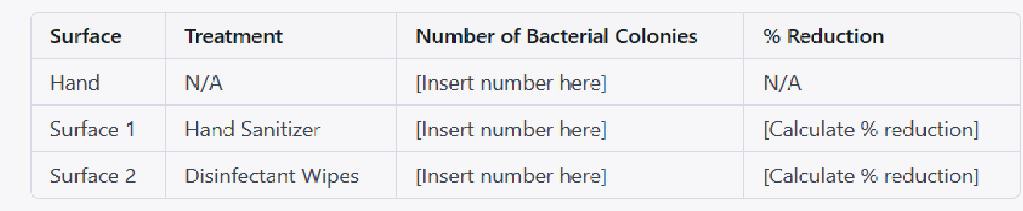
  • Record the number of colonies of bacteria present on each petri dish after 24 hours of incubation.
  • Calculate the percentage reduction in bacterial growth for each cleaned surface compared to the hand sample.
  • Draw conclusions about the impact of frequent cleaning on reducing the spread of germs on commonly touched surfaces.

Note from ChatGPT: This experiment is to be conducted under adult supervision and with appropriate safety measures, such as wearing gloves, using aseptic techniques, and following all local lab safety regulations.

From ChatGPT

In addition, I asked it to generate the above table to help with data collection, but I think a simpler version would be better for the 2nd-3rd grade age group. The overall experimental design might be a bit too advanced for this age group as well, but I didn’t enter in the age range as parameters for the design.

I also used AI to create the featured image. I searched “baking soda and vinegar volcano experiment at an elementary school science fair in a gym” and got the result. It wasn’t exactly what I was looking for, but it’s close.

Overall, I think AI is very useful for creating classroom materials, like worksheets, or generating ideas for projects or other assignments. As long as you are specific about what you are looking for, AI can shrink the amount of time you put into planning lessons.

How AI Could Lead Future Teachers to Water, but not Make them Drink.

There are many potential implications for AI to be used

As the development of AI rapidly progresses, there are many applications that could be used for future teachers. Ever struggling to think of quality multiple choice questions? Enter chatGPT being told to “Make me a multiple choice test on molar mass for high school students” and you get…

The great thing about this for teachers is that it can provide a framework for question ideas or prompts. These questions can be used to make study materials on websites like Kahoot! or Quizlet. If a teacher is feeling up for more chatGPT prompted materials, they can develop whole lesson plans/ideas. By prompting chatGPT with “Write me lesson plans for stoichiometry in chemistry. Using science standards from the state of Oregon”, I was provided the following:

These lesson plans provide ideas for teachers to be able to build on to deliver quality instruction to students. Ideas for lesson plans can be helpful due to their ability to generate new ideas for teachers. However, we know how teaching has much more to do with developing relationships with students than it does have to do with making lesson plans and creating tests. Here come chatGPT, yet again, to the rescue. When asked “How to console struggling students as a high school teacher”, chatGPT responded with:

Response from chatGPT

To my surprise, chatGPT offered pretty helpful advice. This advice can be useful for teachers to ground themselves and provide perspective to be able to be the most effective educators to our students. To many students surprise, teachers are not robots like chatGPT is.

Image by Lexica

AI generated responses can be a great resource for teachers to help them develop materials, prepare for their classes, or grow in toolkit skills for student interaction. However, all of these things require, dedication, effort, and consistency. AI can help teachers find water, but it cannot make them drink. There is exponential opportunities provided by the help of opensource AI, but it requires professional stewardship and honest work to be able to derive all from it.