Over the course of the semester, I have been able to utilize the different technologies we have learned about over the course to create some awesome resources that could be used in my classroom in the future! This post will highlight some of my favorite resources that I have made.
This resource has two different google forms that could be useful in the classroom. The first form is a short ELA quiz for 5th grade students to practice conjunctions and verbs. The second form takes students on a choose your own adventure, where they get to explore a new city and learn about some things that make that city unique.
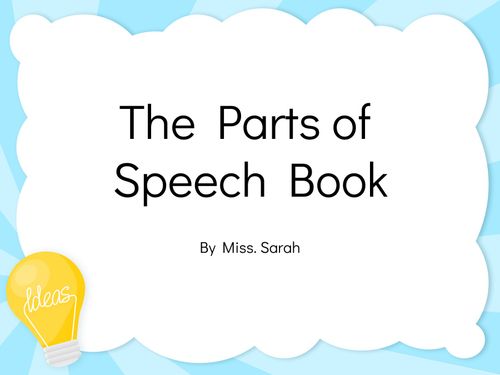
Using book creator, I created a parts of speech book that helps teach 2nd grade students and beyond about the different parts of speech, while incorporating some social studies concepts around the government.
Using Google My Maps I created a map that allows students, specifically 4th graders, to explore the state capitals of the West region of the US. This allows students to learn the capitals while interacting with a map and visualizing where each capital is located.
Finally, this adobe express presentation shares some information about me! This can be shared in the first week of school to help students and parents get to know their teacher better.
This lesson is for 4th grade students and covers parts of speech. The goal of this lesson is for students to be able to label parts of speech in a sentence. Students will listen to/read the book that outlines each part of speech and then will work in groups to stamp different parts of a sentence for each part of speech. This lesson would be best used at the end of a unit on parts of speech in order for students to show how much they learned. The technology used is book creator and Figma. The book helps students review the parts of speech, and Figma is a great tool for collaboration on one document.
It’s so crazy to think back at the time spent at UP and studying to become a teacher. It’s so crazy that 10 years ago you graduated from college.
While I don’t want to spoil too much of what lies ahead for you I am happy to report that you are loving teaching! You will get to spend time in different classrooms, starting with a year in third grade, two years in fifth grade, and now have found the best spot teaching fourth grade! All the doubts that you have had about teaching have drifted away, as you have found the best school and colleagues and are loving teaching your fourth graders. All though somedays may be difficult, the reward of seeing your students progress is so worthwhile!
You also got to enjoy some travel after college! Finally being able to freely travel around the summer after college was one of the best experiences- just like you always thought Greece was the most amazing place ever!
Just remember to trust in yourself and those around you- everything will work out in the end.
This google site guides students through learning about two different native tribes from Oregon. This lesson is aimed for 4th grade students, and entails having two different pages with information as well as an exit ticket where students can demonstrate what they learned from the lesson.
I enjoyed exploring google forms! I think that google forms can be a very useful tool in the classroom. It can be useful to assess student’s knowledge but can also be used as a fun tool to help students learn.
I created a short quiz for 5th-grade students in ELA. I was inspired to do this as my students are currently working on activities similar to these, so I thought this could be used as an informal assessment to see where student’s knowledge is at. The quiz covers verbs and conjunctions.
I also created a choose your own adventure google form that allows students to take a spring break vacation. The students have the opportunity to choose a location to explore and are prompted with different fun facts and activities to interact with to explore the area.
The book that I created focuses on the different parts of speech in grammar. This means that this book would be most useful when introducing parts of speech in around second grade. However, this book could also be used later for students.
I also wanted to tie in social studies as the book uses examples of social studies concepts such as the White House and the President. I thought that in adding this it would help tie in other concepts as well as making it more engaging for students.
I chose to make this story in adobe express because I liked how it had the feature of creating image collages. I also have experience working with sway and thought it would be interesting and useful to explore a new technology. This program was easy to use and navigate,
Featured Image
Christopher Boswell – “Stormy Skies Architecture Landscape Bellevue Washington Downtown City Skyline” (Adobe Express)
This lesson is aimed at 4th-grade students to help them learn about the different US capitals. For this lesson, I chose to focus on the US capitals in the western region, and you could make a similar lesson when focusing on the other regions within the US.
Instructions
For this lesson, students will look at the different state capitals in the Western region. Students will fill out a worksheet while they look at the map, where they write down the capital and match it to the state, as well as identify a specific geographic feature of that area (ie. mountains, lakes, rivers, etc.).
Goals/Objectives
This will allow students to learn the state capitals as well as practice identifying and recognizing different geographic features of regions. This also allows students to get a visual idea of where each state and its capital is located, creating a hands-on interactive activity rather than simply having students memorize the information.
In exploring AI and ChatGPT I chose to ask ChatGPT to “Create a creative and interactive lesson for 4th and 5th graders about understanding emotions that is culturally responsive”. In asking this of ChatGPT it would be interesting to see how they interpret cultural responsiveness and how that might make the lesson different. I also have planned a lesson on this specific subject and wanted to see how the lesson that I created compared to what ChatGPT might offer as a lesson plan.
Here is what ChatGPT offered when asked “Create a creative and interactive lesson for 4th and 5th graders about understanding emotions that is culturally responsive”…
Here’s a lesson plan for understanding emotions that can be adapted for 4th and 5th graders with a focus on cultural responsiveness:
Objective: Students will understand the concept of emotions and be able to identify and express their own emotions in a culturally responsive manner.
Materials:
Chart paper and markers
Emotion cards (can be made by the teacher or downloaded from the internet)
Index cards and pens
A large bag or box
Examples of culturally diverse books, music, and art that express emotions
Introduction (10 minutes):
Ask students to think about times when they felt happy, sad, angry, or any other emotion.
Draw a chart on chart paper with four columns labeled “Feeling,” “Facial Expression,” “Body Language,” and “Words.”
Explain that emotions can be expressed in different ways across cultures and that it’s important to be culturally responsive when understanding and expressing emotions.
Show examples of culturally diverse books, music, and art that express emotions.
Ask students to help you fill in the chart by suggesting examples of each type of expression for each emotion from different cultures.
Direct Instruction (15 minutes):
Explain that emotions are natural and normal reactions to situations and events in our lives.
Use the chart as a visual aid to help students understand the different ways that emotions can be expressed across cultures.
Show students the emotion cards and have them sort the cards into categories of “big” emotions (such as happiness, anger, sadness) and “smaller” emotions (such as frustration, embarrassment, excitement).
Interactive Activity (25 minutes):
Hand out index cards and pens to each student and ask them to write down a situation or event that has made them feel a strong emotion.
Have students take turns sharing their situations and the emotions they felt.
As students share, have the class brainstorm and write down the different expressions (facial, body language, words) that might accompany that emotion across cultures.
Place the index cards in a large bag or box and mix them up.
Have students take turns drawing a card from the bag and acting out the emotion described on the card, considering cultural differences in expression.
As a class, try to guess the emotion the student is acting out, considering cultural differences.
Discuss any similarities and differences in expression of emotions across cultures.
Conclusion (10 minutes):
Review the chart on chart paper, pointing out how emotions can be expressed in different ways across cultures.
Emphasize the importance of understanding and expressing emotions in a culturally responsive manner.
Encourage students to continue to practice identifying and expressing their emotions in a culturally sensitive way.
Assessment: Observe students during the interactive activity and take notes on their ability to identify and express emotions in a culturally responsive manner. Provide individual feedback and support as needed. Encourage students to share their perspectives and respect different cultural expressions of emotions.
My Personal Takeaways: I think that AI can be useful for teachers as a starting point to generate ideas for lessons. In comparing my own lesson to what ChatGPT offered there were many similarities in concepts and activities. I think this can be a great way to generate ideas and adapt lessons that AI can create to the individual needs of your classroom.
This lesson is aimed at 3rd graders but could be used in 3rd-5th grades.
Emotions are something that we all experience, but emotions can look different for everyone. For example, when someone is happy they may start smiling or become energetic. Just because they may not be smiling does to mean that they cannot be happy.
Today we are going to look at different ways that people show their emotions so that we can recognize how our friends might feel. When we are able to understand how others feel we can show empathy for them. Empathy is when we are able to understand and share the feelings of others. We can put ourselves in their shoes and understand what it might feel like to be that person.
.Empathy means that we must use our brains and our hearts to understand others!
Naming Other’s Emotions
What might these two kids be feeling?
Yes- They are probably feeling happy or excited! We can see the smiles on their faces and the excitement they are feeling.
What might these people be feeling?
Yes- He may be feeling sad, as we can see he is crying and his eyes are looking down.
Yes- They may also be feeling sad, as we can see how their bodies are turned and how their heads and eyes are looking down.
What differences can you notice between the two different emotions this person is feeling? How can you tell?
Yes- On the left, she may be feeling annoyed while on the right she may be feeling sad.
It is important to look for physical signs that may give us an idea of how people are feeling.
With the beginning of a new year and a new school semester, I find it important to outline some goals/resolutions for myself for this upcoming semester.
Establish a good sleep routine– We all know that sleep is important and yet still do not get enough sleep. This semester I am going to try to establish a good sleep routine meaning I try to consistently not go to bed after midnight so that I do not look like this during class.
2. Get Exercise– Whether this is by going to the gym, going on a walk with friends, or going hiking I want to get more exercise and spend time in the sunshine (when it hopefully gets sunny outside soon).
I also love to listen to some feel-good music when I exercise.
3. Stay Organized– It’s easy to get caught up in the chaos that is the school year but I always feel so much better when I have an organized and clean space!
If I do all these things I think that I will have a great semester and rest of the school year!